Automated Data Center Operations Security and Energy in 2026: A Practical Blueprint

Automation is now a data center survival skill.
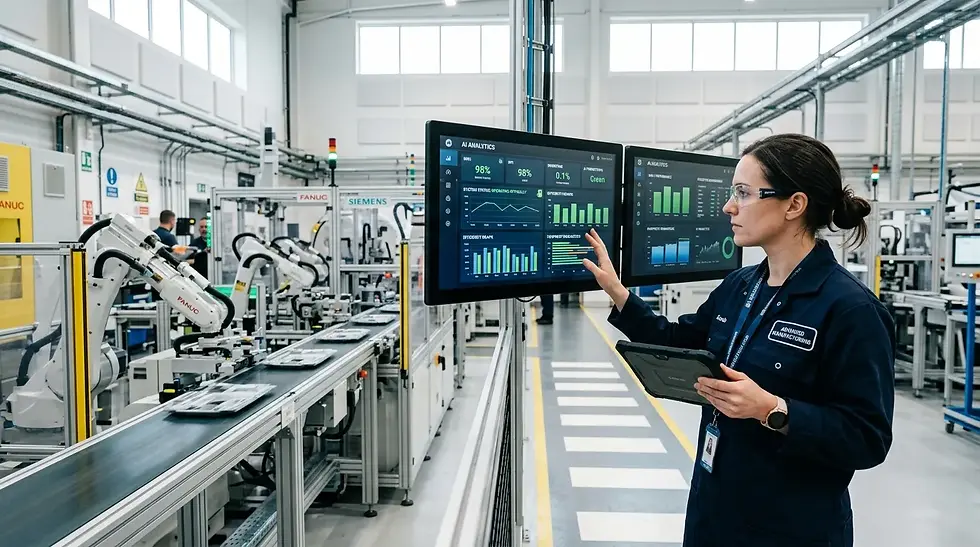
In 2026, automated data center operations sit at the intersection of three non-negotiables: availability, cybersecurity, and energy performance. AI-heavy workloads, tighter reporting obligations, and rising operational complexity are pushing operators to move beyond “scripts and dashboards” toward closed-loop operations: measure, decide, act, verify—safely and efficiently.
At Score Group—“Là où l’efficacité embrasse l’innovation…”—we approach this shift with a tripartite architecture: Energy, Digital, and New Tech. Our divisions Noor Energy, Noor ITS, and Noor Technology help organizations design pragmatic automation that reduces risk, optimizes consumption, and improves resilience—without turning operations into a black box.
Key idea for 2026: Automate what is measurable, defend what is automated, and prove results with auditable KPIs.
Why automated operations matter more in 2026
Energy demand is rising—data centers are a visible driver
Electricity planning is increasingly shaped by large computing facilities. The IEA highlights that U.S. data centers consumed around 180 TWh in 2024 and expects data center demand to keep rising through 2030, adding roughly +240 TWh versus 2024 levels. (iea.org)
On the investment side, the IEA also notes that global investment in data centres nearly doubled since 2022, reaching about $0.5 trillion in 2024, with the United States accounting for the largest share of global data center electricity consumption in 2024. (iea.org)
In the U.S., the EIA forecasts the strongest four-year growth in electricity demand since 2000, driven largely by large computing facilities including data centers. (eia.gov)
Outages remain expensive—and often preventable
Uptime Institute research shows that while frequency and severity trends can improve, the business impact remains high: 54% of survey respondents said their most recent significant outage cost more than $100,000, and 16% said it exceeded $1 million. Power issues remain a common driver, and four in five respondents believe their last serious outage could have been prevented with better management, process, and configuration. (intelligence.uptimeinstitute.com)
Compliance pressure is increasingly operational
Security and sustainability are no longer “policy-only” topics; they affect day-to-day operations, tooling, and evidence. In the EU, NIS2 required transposition by 17 October 2024 and applies from 18 October 2024, reinforcing expectations around cyber risk management and incident handling for covered entities. (trade.gov)
On the sustainability side, the European Commission adopted an EU-wide scheme requiring data centre operators to report key performance indicators to a European database by 15 September 2024, and then by 15 May 2025 and subsequent years. (energy.ec.europa.eu)
What “automated data center operations” means in practice
From tooling to an operating model
Automation in 2026 is not just “auto-remediation.” It is an operating model that connects:
Observability (logs, metrics, traces, events, energy telemetry)
Decisioning (rules, policies, predictive analytics, capacity models)
Orchestration (runbooks, workflows, infrastructure-as-code)
Verification (post-change validation, drift detection, audit evidence)
When done well, you reduce manual toil, shorten mean time to detect/resolve, and create consistent outcomes—while keeping humans in control of high-impact actions.
Automation domains that matter most for security and energy
Facilities & energy: UPS/generator status, cooling controls, setpoints, power chain alarms, energy metering, integration with BMS/GTB/GTC.
IT infrastructure: firmware baselines, patching windows, network segmentation changes, configuration drift, backup verification.
Platform operations: cluster auto-scaling, workload placement, SRE runbooks, policy-as-code.
Security operations: detection engineering, automated enrichment, SOAR playbooks, identity governance triggers.
Security-by-design: the hidden risk of automation (and how to control it)
Automation expands the attack surface—unless you treat it as a privileged system
Automation platforms hold powerful credentials, can change production at speed, and often span IT and facilities. In 2026, secure automation typically includes:
Strong identity and least privilege for humans and machines (service accounts, workload identities).
Secrets management (rotation, scoped tokens, no static keys in scripts).
Change control with policy gates (approvals for high-risk actions, automated rollback where possible).
Immutable logging for actions taken by bots and runbooks (forensics-ready).
Network segmentation between automation control planes and production workloads.
Zero Trust is a practical architecture for automated operations
Zero Trust is not a product; it’s a design approach that fits automation well: authenticate explicitly, authorize continuously, and assume breach. A widely cited reference is NIST SP 800-207 (Zero Trust Architecture). (csrc.nist.gov)
Concretely for data centers, this translates into micro-segmentation, device/workload identity, continuous posture checks, and strict authorization for east-west traffic—especially between management networks, virtualization platforms, and storage.
Where Score Group helps: operational cybersecurity, not just compliance
At Score Group, our division Noor ITS supports cybersecurity programs that are actionable for operators—audits, hardening, and incident readiness—aligned with real constraints in data center environments. For a structured approach, see our page on cybersecurity services (audits, penetration testing, strong authentication).
Energy and sustainability automation: prove efficiency, not intentions
Start with shared metrics (PUE is necessary but not sufficient)
PUE (Power Usage Effectiveness) remains a foundational metric for facility efficiency and is defined and promoted as a global metric by The Green Grid. (thegreengrid.org)
In 2026, high-quality energy automation usually expands beyond a single KPI to include:
IT load vs total load (granular sub-metering by room/row, UPS output, PDUs)
Cooling system performance indicators (temperature/humidity bands, fan/pump energy, alarms)
Water footprint awareness (where applicable, aligned with local constraints and reporting)
Carbon-aware operations (where grid signals are available and business constraints allow)
Reporting is becoming structured (EU example)
The European Commission confirms that the EU scheme requires data center operators to report KPIs to a European database on fixed deadlines (starting in 2024) and noted that EU data centres consumed 76.8 TWh in 2018 as a historical benchmark. (energy.ec.europa.eu)
The Commission also indicates an upcoming data centre energy efficiency package planned for March 2026, signaling that reporting and sustainability expectations will likely keep maturing. (energy.ec.europa.eu)
Concrete automation use cases that reduce energy without compromising uptime
Cooling optimization with guardrails: adjust setpoints and airflow based on real-time thermal telemetry, with safe ranges and automatic reversion when anomalies appear.
Predictive maintenance: detect drift in UPS batteries, chilled water performance, or filter clogging before it becomes an incident (reduces emergency interventions and inefficiency).
Workload placement policies: schedule non-urgent jobs when the facility is in a more efficient operating region (subject to SLAs and risk acceptance).
Capacity right-sizing: reduce over-provisioning via better forecasting, helping avoid “always-on” stranded capacity.
to 1,829 GWh (Q4
( cso.ie )
A reference architecture for 2026: Energy + Digital + New Tech
Layer 1 — Energy foundation (Noor Energy)
With Noor Energy, Score Group helps build an energy foundation that makes automation possible: measurement, governance, and optimization. A practical starting point is energy management—contracts, consumption steering, and cost/efficiency optimization—described on our Energy Management page.
For organizations seeking a formal management system, ISO 50001:2018 provides a recognized framework for establishing and improving an Energy Management System. (iso.org)
Layer 2 — Digital infrastructure and resilience (Noor ITS)
With Noor ITS, we focus on the digital backbone: reliable networks, secure platforms, and a data center design that supports automation rather than fighting it. Our data center scope includes conception and optimization—see DataCenters: performance, security and storage.
Automation must also assume failures will happen. That’s why resilience engineering and recovery automation matter—explore PRA/PCA (business continuity and disaster recovery) and secure hosting foundations via Cloud & Hosting.
Layer 3 — New Tech for operational automation (Noor Technology)
With Noor Technology, Score Group integrates pragmatic innovation: AI for predictive analytics, IoT for real-time telemetry, and RPA to industrialize repetitive operational workflows (reporting, ticket enrichment, compliance evidence collection). A good example is RPA and business process automation—often a fast path to value when teams want results without refactoring every toolchain.
KPIs and automation levers (what to measure, where to act)
Table: Operational KPIs that link security and energy (and how automation supports them)
Area | KPI (example) | What it tells you | Typical data sources | Automation lever (2026-ready) |
|---|---|---|---|---|
Energy efficiency | PUE | Facility overhead vs IT load | Utility meters, UPS output, PDU telemetry | Cooling optimization workflows with safety thresholds and rollback |
Reliability | MTTR / time to mitigate | How fast you recover from incidents | Monitoring alerts, ticketing, runbooks | Auto-triage, runbook automation, post-change verification |
Security posture | Patch compliance / configuration drift | Exposure created by outdated or inconsistent systems | CMDB, vulnerability scanners, IaC repos | Policy-as-code gates, staged patch orchestration, drift remediation |
Identity & access | Privileged access events | Risk concentration in admin and automation accounts | IAM logs, PAM, SSO, SIEM | Just-in-time access, automated approvals, secrets rotation |
Resilience | Backup success + restore tests | Whether recovery will work under pressure | Backup platforms, DR drills, storage logs | Automated restore validation, scheduled DR exercises, evidence capture |
An implementation roadmap (without “big bang” risk)
Phase 1 (0–90 days): stabilize, measure, and secure the automation plane
Define a minimal KPI set (energy + reliability + security) and instrument your metering and logs.
Map “highest-impact” runbooks (power chain alarms, cooling excursions, network incidents, backup failures).
Harden automation identities (least privilege, secrets, MFA/strong auth, logging).
Establish change guardrails: approvals for risky actions, automatic rollback patterns.
Phase 2 (3–6 months): automate repeatable operations with evidence
Introduce standard workflows for patching, configuration drift, capacity changes, and incident response.
Deploy RPA where tool integration is slow (compliance reporting packs, cross-system data collection).
Make verification mandatory: every automated action produces audit-friendly output (what changed, who/what approved, before/after checks).
Phase 3 (6–12 months): closed-loop optimization (human-in-the-loop)
Predictive analytics for failures (battery degradation, abnormal thermal patterns, repeated breaker trips).
Policy-driven orchestration for workload placement and maintenance windows.
Continuous compliance reporting aligned with your regulatory scope (security + sustainability).
Common pitfalls in 2026 (and how to avoid them)
Pitfall: automating unstable processes. Fix the process first; then automate the stable version.
Pitfall: treating energy and security separately. Your most powerful automations are privileged—secure them like production.
Pitfall: relying on one metric (only PUE). Add operational KPIs (drift, restore tests, MTTR) to avoid efficiency gains that increase risk.
Pitfall: ignoring the “evidence trail.” In regulated contexts, if you cannot prove it, you did not do it.
FAQ: Automated data center operations, security and energy in 2026
What is the fastest automation initiative that improves both security and energy?
Start with telemetry + guardrailed runbooks. Instrument energy metering (where possible) and centralize logs from IT and facilities, then automate a small set of high-frequency operational actions: cooling excursion response, power chain alarm triage, backup failure handling, and patch orchestration. The security gain comes from consistency and auditability; the energy gain comes from faster anomaly containment and better control of cooling and capacity. Uptime data shows many outages are preventable with better management and process—automation makes that repeatable. (intelligence.uptimeinstitute.com)
How do we secure automation tools (scripts, RPA, orchestration) against takeover?
Treat automation as a privileged system. Implement least privilege for service accounts, store secrets in a vault (rotate them), and log every action with immutable retention. Segment the network so automation control planes cannot freely reach production assets. Add policy gates for high-risk changes and require verification checks after execution. Using a Zero Trust approach—authenticate explicitly and authorize continuously—aligns well with modern automation, as described in NIST SP 800-207. (csrc.nist.gov)
Which energy KPIs should a 2026 data center track beyond PUE?
PUE remains foundational (defined by The Green Grid), but it should be complemented with indicators that explain why PUE moves: sub-metered loads (UPS/PDU/room), cooling system energy, and operational signals like thermal alarms, maintenance events, and capacity utilization. In the EU, reporting expectations reinforce the need for structured KPI tracking and repeatable data collection. When KPIs are well-designed, automation can act on them safely—adjusting cooling behavior, scheduling maintenance, and producing audit-ready reports. (thegreengrid.org)
What does NIS2 change for data center operations teams in 2026?
NIS2 raises the bar on operational cyber risk management: incident readiness, governance, and demonstrable controls. It also pushes cybersecurity from a separate function into a shared operational responsibility—especially where automation, remote management, and third-party tooling are involved. Member States were required to transpose NIS2 by 17 October 2024 and apply measures from 18 October 2024, so by 2026 many organizations are expected to show mature practices: access control, monitoring, response playbooks, and supplier oversight. Automation can help—if it is secured and auditable. (trade.gov)
What now?
If you want automated operations that improve security and energy performance without increasing risk, align your roadmap to the three pillars: Energy (measurement and optimization), Digital (robust infrastructure and resilience), and New Tech (AI/RPA/IoT for operational execution). At Score Group, our divisions Noor Energy, Noor ITS, and Noor Technology can support assessment, design, and integration—starting from your current constraints and compliance needs. Explore our data center capabilities, cybersecurity services, and energy management on score-grp.com.