Data Center PUE in 2026: Understanding, Measuring, and Improving Power Usage Effectiveness
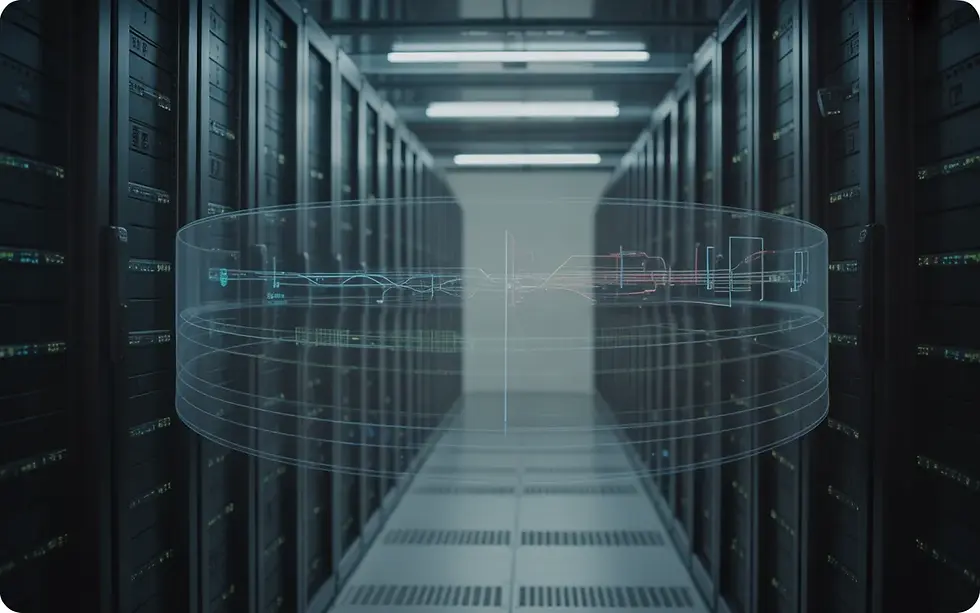
PUE is the metric that reveals how efficiently a data center turns electricity into computing.
If you are searching for a practical, 2026-ready guide to understanding, measuring, and improving data center PUE (Power Usage Effectiveness), this article is designed to help you move from “we have a number” to “we can trust it, act on it, and sustain progress”—especially in a context shaped by AI-driven density, tighter sustainability expectations, and the new ISO/IEC 30134-2:2026 PUE standard.
At Score Group—Là où l’efficacité embrasse l’innovation…—we support organizations through their energy and digital transformation with a tripartite approach: Energy, Digital, and New Tech. Data center efficiency sits exactly at the intersection of these three pillars.
What is PUE—and why it still matters in 2026
PUE definition (and what the ratio really means)
PUE is the globally used KPI for data center infrastructure energy efficiency, promoted by The Green Grid and formalized through the ISO/IEC 30134 series (with the latest edition being ISO/IEC 30134-2:2026).
PUE = Total Data Center Energy / IT Equipment Energy
Interpretation:
PUE = 1.0 would mean every kWh goes only to IT (no cooling, no power losses). In practice, PUE is always > 1.0.
A lower PUE generally indicates less overhead (cooling, power conversion, distribution losses, lighting, etc.) per unit of IT energy.
PUE is necessary—but not sufficient
In 2026, PUE remains a core operational KPI, but it has known limitations: it does not describe how efficiently IT produces useful work, and it does not directly reflect carbon, water, or heat reuse outcomes. That’s why many organizations complement PUE with additional metrics (depending on goals and reporting context), such as:
IT utilization / workload efficiency (to avoid “efficiently powering idle compute”).
Carbon-related indicators (because two identical PUEs can hide very different grid emissions).
Water-related indicators (especially where evaporative cooling is used).
Still, if you cannot measure PUE reliably, it’s difficult to prioritize and validate facility-side improvements.
How to measure data center PUE correctly (and avoid misleading results)
Step 1: Define the measurement boundary before you buy more sensors
Most PUE disputes are not about math—they’re about scope. Two sites can report different PUEs simply because they draw the boundary differently (what is counted as “total facility energy,” how on-site generation is treated, whether office space is included, etc.). The ISO/IEC 30134-2:2026 standard explicitly provides guidance to improve consistency and comparability (including measurement categories and treatment of special cases like on-site generation and unmeasured energy).
Practically, decide and document:
Which buildings/rooms are included (data halls only vs. full facility including offices).
Which loads are included (UPS, cooling plant, pumps/fans, humidification, lighting, security systems, etc.).
How you handle shared infrastructure (e.g., a chiller plant serving multiple spaces).
Step 2: Place meters where they reflect reality (not convenience)
PUE requires two energy values—numerator and denominator—measured over the same period (typically kWh over a month/quarter/year). In practice, organizations often start with electrical power meters and then aggregate to energy.
Common metering intent:
Total facility energy: as close as possible to the site incoming electricity supply (utility feed), plus any other energy streams included in your scope.
IT equipment energy: power delivered to IT load (servers, storage, network) measured at the most appropriate distribution level your instrumentation allows.
Key quality rules:
Same time base: numerator and denominator must cover the exact same time window.
Calibrated / consistent meters: drift and inconsistent sampling intervals can create “false improvements.”
Separate IT from mechanical and electrical auxiliaries: misclassification is a frequent source of error.
Step 3: Use the right reporting cadence (annual + operational views)
A single “annual PUE” is useful for strategic reporting, but operational teams also need shorter-cycle views to detect control issues (setpoint drift, simultaneous humidification/dehumidification, stuck dampers, degraded filters, suboptimal chiller sequencing, etc.).
Start with monthly PUE to see seasonality and baseline stability.
Add weekly/daily trends to catch operational anomalies early.
Correlate with weather and IT load to separate “normal variation” from true regression.
What “good PUE” looks like in 2026 (benchmarks with context)
There is no universal “good” PUE without context (climate, redundancy, density, age, cooling architecture, reporting boundary). That said, benchmarks help set realistic targets.
PUE benchmark snapshot (with cited 2024–2025 references)
Reference point | Reported PUE | What it tells you (and what it doesn’t) |
|---|---|---|
Industry average (survey-based) | 1.56 (Uptime Institute Global Data Center Survey 2024) | Useful for macro positioning; includes many legacy facilities, so it can lag best practice. Source: Uptime Institute 2024 report (PDF). |
Many recent builds (observed trend) | ~1.3 “and sometimes much better” | A realistic target band for modern designs when climate and architecture allow. Source: Uptime Institute 2024 report (PDF). |
Hyperscale benchmark example (public disclosure) | 1.09 trailing-twelve-month PUE (Q2 2025) | Demonstrates what’s possible at scale with highly optimized engineering and operations; not always comparable to enterprise scopes and constraints. Source: Google Data Centers – Efficiency. |
In parallel, the energy context is intensifying: the IEA reports data centres accounted for around 1.5% of global electricity consumption in 2024 (415 TWh), with growing pressure from AI and continued investment growth. Source: IEA – Energy and AI (Executive Summary).
How to improve PUE: the levers that work (from quick wins to deep retrofit)
1) Air management and temperature strategy (often the fastest PUE wins)
Many facilities lose efficiency through avoidable mixing of hot and cold air, bypass airflow, and conservative setpoints applied without measurement at server inlets.
High-impact actions:
Hot/cold aisle containment and disciplined blanking panel use to reduce recirculation.
Inlet-focused control: control to server intake temperatures (not just return air).
Raise temperatures safely where permitted: ENERGY STAR notes that increasing server inlet temperatures can reduce energy use, with a commonly cited rule of thumb of ~4% to 5% energy savings for every 1°F increase, depending on site design and conditions. Source: ENERGY STAR – Raise the Temperature.
Good practice in 2026 is to align thermal strategy with current manufacturer guidance and industry recommendations (often referenced through ASHRAE thermal guidance), and to validate changes using inlet sensors—not guesswork.
2) Cooling system optimization (controls matter as much as hardware)
Cooling is typically the biggest facility overhead behind a “high” PUE. Improvements can come from both design and tuning:
Economization where feasible (air-side or water-side), leveraging ambient conditions.
Variable speed drives and optimized staging for fans, pumps, and compressors.
Chilled water temperature reset and smarter sequencing to reduce lift and compressor work.
Leak-free airflow pathways (floor grommets, cable cutouts, pressure balancing).
In many legacy sites, the most durable gains come from controls and airflow discipline before large mechanical replacement programs.
3) Power chain efficiency (UPS, distribution, and right-sizing)
PUE is affected by losses in the electrical path from utility to IT load. Common improvement themes:
Right-size redundancy for actual business requirements (overprovisioning can increase part-load losses).
Optimize UPS operating ranges and avoid chronically low load factors where possible.
Reduce conversion steps when appropriate (while maintaining resilience and maintainability).
These changes must be coordinated with reliability objectives and operational constraints—PUE improvement should never compromise availability.
4) IT-side decisions that affect PUE (even if PUE isn’t an “IT efficiency” metric)
PUE’s denominator is IT energy. If you increase compute utilization intelligently (e.g., consolidation, decommissioning idle gear, virtualization), you can sometimes improve PUE because fixed overhead is spread across more useful IT work—but PUE alone won’t prove that your IT is efficient. That’s why mature programs track PUE alongside IT performance KPIs.
PUE in 2026: what has changed (AI density, liquid cooling, reporting, and sustainability)
AI-driven rack density is reshaping “facility efficiency” logic
Higher density racks can increase total IT energy rapidly, shifting the balance between cooling and power distribution. As the Uptime Institute notes, PUE limitations will become more visible as facilities specialize in denser architectures and adopt direct liquid cooling. Source: Uptime Institute 2024 report (PDF).
Practical implications:
Traditional airflow optimization remains essential, but may not be sufficient for high-density AI zones.
Facilities may evolve toward hybrid cooling (air + liquid) with zone-based KPIs and operational playbooks.
You may need granular metering (by room/zone) to avoid an “average PUE” that hides hotspots and inefficiencies.
Heat reuse and on-site generation: PUE doesn’t tell the full story
PUE can improve when overhead drops—but it won’t “credit” you for heat reuse into a district heating network or for choosing low-carbon electricity. In 2026, many organizations therefore treat PUE as a facility efficiency control metric, while sustainability steering uses additional indicators aligned with ESG and regulatory expectations.
Transparency and reporting are rising (especially in the EU)
Regulation and structured reporting can make measurement rigor non-negotiable. For example, the European Commission has adopted an EU-wide reporting scheme for data centers, requiring operators to report key performance indicators to a European database on specified deadlines (e.g., initial reporting in 2024, then annually). Source: European Commission – data centre sustainability reporting scheme.
Even for organizations outside the EU, these frameworks increasingly influence customer questionnaires, audit expectations, and best practices.
A practical roadmap to measure and improve PUE (the Score Group way)
At Score Group, our role is to act as a global integrator—bringing together energy expertise, digital infrastructure, and innovation so performance improvements are measurable, sustainable, and operationally realistic.
Instrument and baseline: define the boundary, validate metering, establish a trusted baseline (monthly + seasonal view).
Find quick wins: airflow management, containment, setpoint strategy, controls tuning, anomaly detection.
Plan structural improvements: cooling architecture modernization, power chain optimization, segmentation for high-density zones.
Operationalize: procedures, monitoring dashboards, continuous commissioning, and governance for change management.
How our divisions typically contribute (depending on your needs):
Noor ITS (Digital pillar): data center design and optimization, monitoring, infrastructure modernization—see our dedicated page on DataCenters services and our approach to Cloud & Hosting when hybrid architectures impact load distribution and efficiency.
Noor Energy (Energy pillar): energy monitoring, steering, and optimization programs—explore Energy management and, when relevant, pathways toward renewable energy integration.
Noor Technology (New Tech pillar): intelligent sensing and analytics (IoT, automation, AI-assisted insights) to detect drift and sustain gains over time.
To keep performance from slipping after initial improvements, many organizations choose ongoing operational support. Score Group provides continuity-oriented approaches through Managed Services, and resilience planning can be aligned with your energy strategy via PRA/PCA when business continuity requirements influence redundancy design (and therefore PUE).
FAQ: Data center PUE in 2026
How often should we calculate PUE: real-time, monthly, or annually?
Use more than one cadence. Annual PUE (12-month rolling) is best for executive reporting because it smooths seasonal effects. Monthly PUE is ideal for tracking progress on improvement projects and identifying weather-related trends. Near-real-time views (daily/hourly) are valuable operationally to detect control problems—like stuck valves, drifting setpoints, or abnormal fan power—before they become expensive. The key is consistency: keep the same boundary, same metering logic, and the same time base for numerator and denominator.
Can PUE improve even if our IT energy increases?
Yes. PUE is a ratio, so it can improve if the data center overhead (cooling + electrical losses) grows more slowly than IT energy—or even decreases due to better controls, airflow containment, or more efficient power systems. This is common when consolidating workloads into fewer, better-utilized systems: fixed overhead gets “shared” across a higher IT load. However, this does not automatically mean your computing is more efficient or sustainable. Pair PUE with IT utilization and sustainability indicators to confirm you are improving outcomes—not just ratios.
What are the most common PUE measurement mistakes?
The top mistakes are boundary confusion and inconsistent metering. Examples include: counting office HVAC sometimes but not always; measuring IT load at a different point than before a UPS upgrade; mixing instantaneous kW snapshots with monthly kWh totals; or using estimated values that later get replaced with real meters (creating artificial “improvements”). Another common issue is failing to account for shared systems like centralized chillers serving multiple spaces. A solid approach is to document the scope in writing, keep the method stable over time, and align your measurement logic with ISO/IEC 30134-2 principles.
Does liquid cooling automatically deliver a better PUE?
Not automatically. Liquid cooling can reduce the need for high fan power and can enable higher supply temperatures (which may improve cooling efficiency), but the overall impact depends on the full system design: pumping energy, heat exchanger approach temperatures, water quality management, control strategy, and how well the facility is zoned for mixed air/liquid deployments. In addition, PUE may not reflect other benefits such as improved compute density per square meter or easier heat reuse. Treat liquid cooling as an architectural option that needs metering and validation, not as a guaranteed PUE shortcut.
Is PUE enough for sustainability reporting in 2026?
Usually not. PUE is essential for facility efficiency management, but sustainability stakeholders increasingly ask about carbon and water footprints, renewable electricity sourcing, and heat reuse. For example, EU-level initiatives emphasize transparency through reporting schemes that include multiple KPIs beyond a single efficiency ratio. Even outside regulated environments, customers and auditors often expect a broader narrative: “How efficient is the facility?” (PUE), “How clean is the energy?” (carbon-related indicators), and “How resource-intensive is the cooling approach?” (water-related indicators). The best practice is to keep PUE as a core operational KPI and add complementary metrics aligned with your goals.
And now?
If you want to turn PUE into a reliable performance lever—measured consistently, improved pragmatically, and sustained operationally—Score Group can support you from assessment to implementation through our Energy, Digital, and New Tech pillars. Explore our DataCenters expertise, strengthen governance with energy management, and operationalize results via Managed Services. To discuss your site and priorities, reach out via our contact page.