Data Center Energy Optimization 2026 Action Plan: A Practical Roadmap for Efficiency, Cooling, and Carbon

Energy efficiency is now a data center capacity strategy.
If you’re searching for a Data Center Energy Optimization 2026 Action Plan, the goal is simple: measure accurately, optimize without risking uptime, and build a repeatable operating model that lowers overhead energy (cooling, fans, power chain losses) while keeping IT performance predictable. In 2026, this matters more than ever as AI and high-density workloads push power and cooling systems to their limits.
This article provides an operational plan you can execute in phases—quick wins first, then structural upgrades—supported by credible industry references and a governance model that aligns Facilities, IT, Finance, and Sustainability.
Why an energy optimization action plan is urgent in 2026
Data centers are no longer a “background” load on the grid. The International Energy Agency (IEA) estimates that data centres accounted for around 1.5% of global electricity consumption in 2024 (415 TWh), and that global data centre electricity consumption is set to more than double to around 945 TWh by 2030—with AI as the most important driver. Source: IEA – Energy and AI (Executive summary)
In the United States specifically, the IEA indicates data centres consumed around 180 TWh in 2024. Source: IEA – Electricity Mid-Year Update 2025
At the same time, the industry’s average PUE improvement has slowed: Uptime Institute analysis shows the industry average PUE was 1.58 in 2023 and has remained roughly flat (about 1.55–1.59) since around 2020. Source: Uptime Institute (UII Update 221, Q4 2023)
At Score Group—“Where efficiency embraces innovation…”—we treat energy optimization as a joint program across Energy, Digital, and New Tech, because real gains come from aligning electrical and cooling infrastructure with IT demand, measurement, and automation.
2026 success criteria: define the right KPIs (not only PUE)
Core efficiency KPIs (facility + IT)
PUE (Power Usage Effectiveness): a top-level ratio to track overhead energy (cooling, power conversion, lighting).
Partial PUE (pPUE): helps pinpoint which zone/system drives losses (e.g., one room, one hall, one cooling loop).
Cooling system KPIs: supply/return temperatures, approach temperatures, fan/pump speeds, economizer hours.
IT utilization indicators: CPU/GPU utilization, memory pressure, storage IOPS per watt, virtualization/container density, “zombie server” rate.
Water and carbon KPIs (increasingly requested by stakeholders)
WUE (Water Usage Effectiveness): introduced by The Green Grid to complement PUE and help assess water sustainability. Source: The Green Grid (WP#35, 2011)
WUI (Water Usage Impact): a newer metric from ITI’s The Green Grid that combines water consumption and local water stress into one indicator—useful for site strategy and cooling choices. Source: ITI (The Green Grid WUI announcement)
CUE (Carbon Usage Effectiveness): a Green Grid metric focused on data center-specific carbon emissions and sustainability assessment. Source: The Green Grid (WP#32, 2010)
Business KPIs (because efficiency can’t break resilience)
Availability and incident rate (especially thermal and power alarms)
Capacity headroom (kW/rack, cooling margin, UPS margin)
Change success rate (optimization must be controlled and reversible)
Step 1 (Weeks 1–4): build a trustworthy baseline you can manage
Map the energy chain end-to-end
A credible baseline requires measuring where energy enters, how it is transformed, and where it is finally consumed:
Utility / MV / transformer inputs
UPS input/output, battery systems, PDUs/RPPs
Chillers/dry coolers/cooling towers, CRAH/CRAC, pumps, fans
IT loads (by row/zone if possible) and high-density zones (GPU clusters)
Normalize data quality (so KPIs are not misleading)
Use consistent time granularity (e.g., 15 minutes for operations, hourly for reporting, monthly for governance).
Document measurement boundaries (what counts in “facility power” vs “IT power”).
Tag and audit meters (calibration, missing data, drift, duplicates).
Unify DCIM, BMS/GTB, and IT telemetry
Energy Star highlights that DCIM converges IT and facilities functions to use energy, equipment, and floor space more efficiently—and can support right-sizing decisions. Source: ENERGY STAR – Optimize Airflow and HVAC (DCIM section)
In practice, the baseline becomes actionable when you combine:
Facilities control and monitoring (BMS/GTB): temperatures, humidity, airflow, chilled water parameters
IT observability: workload scheduling, utilization, throttling, equipment inlet temperatures
Analytics and automation: anomaly detection, predictive maintenance, optimization recommendations
Step 2 (0–90 days): quick wins that protect uptime
Airflow management and containment (high ROI, low disruption when planned)
Start with fundamentals: hot/cold aisle layout, blanking panels, sealing cable cutouts, preventing bypass air, and implementing containment where appropriate. ENERGY STAR notes that, when used in combination with containment, the U.S. DOE estimates a 20% to 25% reduction in fan energy use. Source: ENERGY STAR – Optimize Airflow and HVAC
Temperature setpoints based on intake conditions (not return air)
A practical best practice is to control cooling based on IT equipment intake temperatures. The U.S. DOE “Best Practices Guide for Energy-Efficient Data Center Design” recommends a default recommended intake temperature range of 65°F to 80°F (about 18°C to 27°C) and emphasizes incremental changes after air management improvements. Source: U.S. DOE (2024 PDF)
IT-side hygiene: remove waste before upgrading infrastructure
Decommission idle and oversized servers (“zombie” assets) with a controlled validation plan.
Enable safe CPU/GPU power management features where compatible with performance targets.
Consolidate underutilized workloads (virtualization / containers) to reduce always-on footprint.
Implement scheduling policies for batch jobs to use the most efficient time windows (where business allows).
Step 3 (3–12 months): structural upgrades for lasting efficiency
Cooling plant optimization (mechanical, control, and sequencing)
Optimize sequencing of chillers, pumps, and CRAH/CRAC units (avoid fighting loops and simultaneous heating/cooling).
Use variable speed drives and tune control loops to reduce unnecessary flow and static pressure.
Increase “economizer hours” when climate and risk profile allow (air-side or water-side, depending on constraints and filtration strategy).
High-density and AI readiness: design for liquid cooling without rushing
In 2026, many facilities face mixed densities (legacy racks plus GPU pods). A robust plan includes:
Defining density zones (standard, high-density, ultra high-density) with separate cooling strategies.
Assessing the facility’s ability to support liquid cooling (space, piping, leak detection, maintenance workflows).
Ensuring monitoring at the rack and server inlet level—especially where temperatures are pushed toward the upper recommended band.
Power chain efficiency: reduce conversion losses and improve visibility
Review UPS operating modes, loading levels, and maintenance strategy.
Reduce stranded capacity by right-sizing modular power blocks where possible.
Add sub-metering to distinguish “IT growth” from “overhead drift” (fans/pumps/controls).
Heat reuse (when local conditions make it realistic)
Heat reuse can be valuable, but it’s highly site-dependent (nearby heat loads, permitted connection, temperature levels, operating hours). Include it as a feasibility workstream—never as a guaranteed outcome.
Step 4: integrate your energy strategy (renewables, flexibility, and carbon-aware operations)
On-site renewables and storage (reduce exposure, improve resilience strategy)
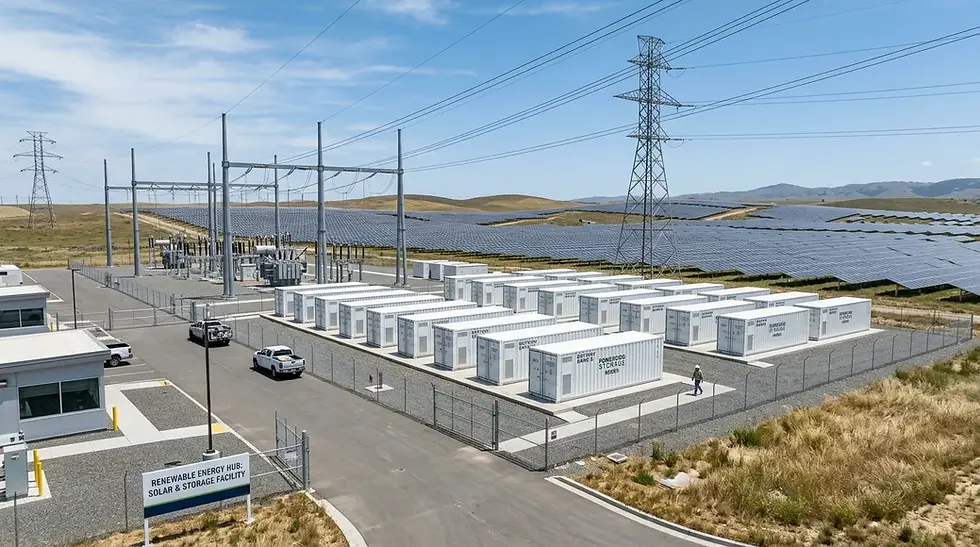
Where feasible, pair efficiency work with local generation and storage. At Score Group, our division Noor Energy supports renewable integration programs (e.g., solar self-consumption and storage) as part of a broader energy performance approach.
Learn more about our approach to clean energy initiatives via Renewable Energy solutions.
Demand flexibility: treat the data center as a controllable load (when possible)
Shift non-critical compute to lower-carbon or lower-constraint time windows (policy-driven, auditable).
Use thermal and electrical buffers (where designed) to smooth peaks.
Coordinate with procurement and compliance teams for credible reporting boundaries.
Make energy management a continuous process—not a one-off project
A 2026 plan should formalize energy governance. ISO 50001 provides a structured framework to establish, implement, maintain, and improve an Energy Management System. Source: ISO – ISO 50001:2018 overview
Step 5: governance, compliance, and reporting (EU and global expectations)
EU reporting deadlines (if you operate in Europe)
The European Commission adopted an EU-wide scheme related to sustainability rating and reporting for data centres under the recast Energy Efficiency Directive, with reporting of key performance indicators to the European database due by 15 September 2024, and then by 15 May in 2025 and subsequent years. Source: European Commission (15 March 2024)
Even if you are outside the EU, these disclosure patterns often influence customer questionnaires and sustainability audits globally—so building a clean data model in 2026 is a strategic move.
Operational cadence (how to keep improvements real)
Weekly: anomaly review (thermal excursions, fan/pump drift, UPS losses)
Monthly: KPI pack (PUE/pPUE, cooling KPIs, WUE/WUI where relevant, incidents)
Quarterly: optimization backlog prioritization + M&V validation
Annually: target reset, investment plan, reporting boundary review
2026 quarter-by-quarter roadmap (action plan you can execute)
2026 Data Center Energy Optimization Roadmap (by quarter)
Period | Main focus | Key deliverables | KPIs to track |
|---|---|---|---|
Q2 2026 | Measurement + baseline | Metering map, KPI definitions, data quality rules, dashboards (Facilities + IT) | PUE baseline, pPUE by zone, fan/pump energy share, inlet temperature distribution |
Q3 2026 | Quick wins + controls tuning | Airflow management/containment rollout, sensor placement, setpoint strategy tied to intake temps | Fan energy trend, hot-spot frequency, cooling stability, incident rate |
Q4 2026 | Structural efficiency upgrades | Cooling sequencing optimization, economizer feasibility, high-density readiness plan (incl. liquid cooling option study) | Cooling system kW/ton (or equivalent), economizer hours, high-density zone stability |
End of 2026 | Governance + reporting readiness | Energy management playbook, continuous improvement cycle, audit-ready reporting pack (energy/water/carbon boundaries) | Year trend vs baseline, data completeness, compliance readiness indicators |
A concrete example: how to quantify impact (without guessing)
To avoid “vanity efficiency,” quantify improvements with transparent math and a measurement plan:
Establish baseline: average IT load (kW) and facility load (kW), then compute PUE = Facility / IT.
Implement one change at a time (e.g., containment + airflow fixes).
Measure before/after across comparable conditions (same IT load range, similar ambient conditions, same operating schedule).
Validate stability: confirm no increase in thermal alarms or hardware throttling.
Tip: Use short optimization cycles (2–4 weeks) and keep a rollback plan. The U.S. DOE guide explicitly recommends incremental temperature changes after air management improvements. Source: U.S. DOE (2024 PDF)
How Score Group delivers the plan: Energy + Digital + New Tech
Score Group acts as a global integrator, bringing together energy performance, digital infrastructure, and innovation—so your optimization program is measurable, secure, and operationally sustainable. Explore our ecosystem on the Score Group homepage.
Noor Energy: energy intelligence for performance
Our division Noor Energy supports the energy pillar with structured approaches to monitoring, steering, and reducing consumption—especially when optimization must align with corporate sustainability reporting and operational constraints.
Energy steering and optimization: Energy management services
Building and control systems integration (GTB/GTC) to link cooling plant performance with real conditions: Building management
Noor ITS: the digital infrastructure foundation (DataCenters + IT)
Our division Noor ITS addresses the digital pillar: infrastructure, reliability, and the data center environment itself—so your optimization work is compatible with resilience and service continuity.
Data center design and optimization capabilities: Score Group DataCenters
Networks/servers/storage foundation (to reduce hidden inefficiencies and improve utilization): IT infrastructure services
Resilience programs and continuity alignment (PRA/PCA): Disaster recovery & business continuity
Noor Technology: AI, automation, and smart connecting
Our division Noor Technology supports the “New Tech” pillar to move from dashboards to decisions—using AI, RPA, and IoT-style sensing where it makes operational sense (predictive maintenance, anomaly detection, and optimization workflows).
Managed Services: keep performance improving after the project
Optimization is not finished after commissioning. To sustain gains, standardize operations and monitoring through Managed Services—especially for multi-site organizations or hybrid environments.
Common pitfalls that derail energy optimization (and how to avoid them)
Chasing a single KPI: PUE alone can hide water stress (WUI), carbon intensity (CUE), or IT inefficiency.
Changing setpoints before fixing airflow: you risk local hot spots and instability; prioritize air management first.
Under-instrumentation: without sub-metering, you can’t prove what worked—or replicate it.
Ignoring IT behavior: idle capacity, poor workload placement, and unmanaged high-density zones can erase facility-side gains.
Weak change management: optimization must be reversible and documented like any other critical infrastructure change.
FAQ: Data Center Energy Optimization 2026 Action Plan
What should be included in a 2026 data center energy optimization plan?
a metering and data model (facility + IT), (
KPIs and reporting boundaries (PUE plus water/carbon metrics where relevant), (
quick wins such as airflow management and control tuning, (
a 3–12 month upgrade roadmap for cooling and power chain efficiency, and (
governance (cadence, ownership, change control). The IEA’s 2024–2030 outlook for data center electricity growth makes it critical to turn optimization into an ongoing operating model, not a one-off retrofit
How can we reduce cooling energy without risking server reliability?
Start by stabilizing airflow: hot/cold aisle discipline, sealing bypass paths, and containment where appropriate. Then control cooling based on intake conditions, not just return air temperature. The U.S. DOE best practices guide recommends a default recommended intake range (65°F to 80°F) and emphasizes making temperature changes incrementally after implementing air management. Pair this with granular sensors (rack inlets, zones) and a rollback plan so performance and uptime remain protected during optimization.
Which metrics should we report in addition to PUE in 2026?
In 2026, many organizations expand beyond PUE to include water and carbon indicators. The Green Grid introduced WUE as a water sustainability metric, and ITI’s The Green Grid recently published WUI to combine water consumption with local water stress for more meaningful impact tracking. For carbon, CUE provides a data center-specific view of emissions. Even when these metrics aren’t mandated locally, they are increasingly requested by customers, auditors, and ESG reporting frameworks—so building them into your operating model improves credibility.
What are realistic “quick wins” for energy efficiency in an existing data center?
Focus on actions that are measurable and low-risk: airflow management, containment in targeted zones, optimizing fan and pump controls, improving sensor coverage, and eliminating bypass air. ENERGY STAR notes that combining airflow management with containment can significantly reduce fan energy use (DOE estimate: 20%–25%). On the IT side, remove idle assets, consolidate underutilized workloads, and enforce power management policies where performance allows. The key is to run improvements in short cycles and validate outcomes with sub-metering and stability checks.
How do we stay compliant with EU data center sustainability reporting?
If you operate in the EU, build reporting readiness into your 2026 plan. The European Commission indicates that data centre operators must report key performance indicators to the European database, with deadlines including 15 September 2024 and then 15 May in 2025 and subsequent years. Practically, this means you need clean KPI definitions, reliable metering boundaries, and auditable data quality processes. Treat compliance as a governance deliverable: assign owners, document methodologies, and run periodic internal audits before formal submissions.
What next?
If your 2026 priority is to reduce overhead energy while keeping reliability and scalability intact, align your program across facilities, IT, and automation from day one. At Score Group, we deliver this through our tripartite approach—Energy (Noor Energy), Digital (Noor ITS), and New Tech (Noor Technology)—to turn measurements into sustained operational performance. Visit Score Group to explore the relevant service lines and engage our teams.