Data Center Standards (ISO, ANSI/TIA-942 and Tiers) in 2026: How to Design, Classify, and Operate Resilient Facilities

Standards are the fastest way to turn data center requirements into auditable engineering decisions.
In 2026, “Data Center Standards ISO TIA-942 and Tiers” typically refers to three complementary families of guidance: the ISO/IEC standards used worldwide (notably ISO/IEC 22237 and ISO/IEC 30134), the ANSI/TIA-942-C infrastructure standard maintained by the Telecommunications Industry Association, and the Uptime Institute Tier Standard (Tier I–IV) used to communicate resilience outcomes. These frameworks are not identical, but when aligned correctly they help you define the right level of availability, maintainability, security, and energy efficiency. (iso.org)
“Là où l’efficacité embrasse l’innovation…” — Score Group
Why data center standards matter more in 2026
AI-driven compute density, sustainability reporting, and operational risk are raising the bar for what “good” looks like in data center design and operations.
Energy & sustainability are now measurable (and in some regions, reportable). The European Commission highlights that data centres consume a meaningful share of electricity and that transparency is essential to reduce energy and water use and increase renewable integration. (energy.ec.europa.eu)
Metrics are being standardized. ISO/IEC 30134-2:2026 (published January 2026) defines Power Usage Effectiveness (PUE) and updates guidance for mixed-use buildings and on-site generation—important for modern campuses and hybrid facilities. (iso.org)
Standards are adapting to AI workloads. In February 2026, TIA announced a new project for an addendum to ANSI/TIA-942-C specifically to accommodate AI computing. (tiaonline.org)
Quick overview: ISO/IEC, ANSI/TIA-942-C, and Uptime Institute Tiers
ISO/IEC 22237: an international backbone for facilities & infrastructure
The ISO/IEC 22237 series defines general principles and a classification system based on availability, security, and energy-efficiency across the planned lifetime of a data centre. It also explicitly frames the need for business risk and operating cost analysis when selecting a classification. (iso.org)
In practice, ISO/IEC 22237 helps you structure requirements across major building blocks, for example:
Building construction (ISO/IEC 22237-2:2024) for site selection, protection against environmental risks, physical intrusion protection, fire protection, and water damage protection. (iso.org)
Power distribution (ISO/IEC 22237-3:2021), including measurement integration along the distribution system. (iso.org)
Environmental control (ISO/IEC 22237-4:2021) for temperature, humidity, particulate, vibration, and related controls. (iso.org)
Security systems (ISO/IEC 22237-6:2024) for protection against unauthorized access, intrusion, internal/external environmental events, and more. (iso.org)
Management & operational information (ISO/IEC TS 22237-7:2018), focusing on operational processes needed to deliver resilience, availability, security, and energy efficiency over time. (iso.org)
ANSI/TIA-942-C: a detailed infrastructure standard plus a certification ecosystem
ANSI/TIA-942 covers data center physical infrastructure broadly: architecture/topology, environmental design, power, cooling, telecom, redundancy, fire protection, monitoring, and physical security, with four Rated levels (Rated-1 to Rated-4). (tiaonline.org)
The latest major revision, ANSI/TIA-942-C, was announced by TIA on May 9, 2024 as an update intended to improve performance, efficiencies, and resilience. (tiaonline.org)
Key point: TIA also runs a TIA-942 Certification Program (design, facilities, readiness), relying on licensed certification bodies to verify conformity. (tiaonline.org)
Uptime Institute Tier Standard (Tier I–IV): a resilience language (topology + operations)
Uptime Institute defines four design performance outcomes: Tier I (Basic Capacity), Tier II (Redundant Capacity), Tier III (Concurrently Maintainable), and Tier IV (Fault Tolerant). (journal.uptimeinstitute.com)
Two clarifications matter in 2026:
Tier is not a “technology recipe.” Uptime emphasizes that Tier definitions specify criteria/outcomes, not fixed technologies—allowing engineering innovation if outcomes are met. (journal.uptimeinstitute.com)
Be careful with “expected downtime” marketing. Uptime notes that, since 2009, the Tier Standard no longer assigns availability predictions to Tier levels because operations heavily influence real availability. (journal.uptimeinstitute.com)
Uptime also reports that it has issued over 4,000 Tier Certifications in more than 122 countries, which explains why “Tier III / Tier IV” remains a common market shorthand for resilience expectations. (ats.uptimeinstitute.com)
Don’t forget the “supporting” ISO standards: security management, energy management, and KPIs
ISO/IEC 27001:2022 is a leading standard for an Information Security Management System (ISMS) and risk management (confidentiality, integrity, availability). ISO also references that over 70,000 certificates were reported across 150 countries in the ISO Survey 2022 context. (iso.org)
ISO 50001 provides a management system framework for continual improvement in energy performance. (iso.org)
ISO/IEC 30134-2:2026 standardizes PUE calculation and reporting—especially relevant when stakeholders demand consistent baselines and auditability for efficiency programs. (iso.org)
ISO vs TIA-942 vs Tiers: what each one is best at (and what it is not)
Comparison table: standards, scope, and typical outcomes
Framework | What it primarily standardizes | How organizations typically use it in 2026 | Important caveat |
|---|---|---|---|
ISO/IEC 22237 | Facilities & infrastructure principles + classification approach (availability, security, energy-efficiency) across lifecycle | As a global reference to structure requirements and document decisions (risk + OPEX lens) | Not a simple “Tier mapping”; it is a broader classification and engineering framework (iso.org) |
ANSI/TIA-942-C | Detailed data center physical infrastructure requirements + Rated-1 to Rated-4 levels | To specify and verify design/build/readiness against a recognized infrastructure standard | Rated levels are defined within TIA’s own scope; avoid assuming equivalence with Uptime “Tier” labels (tiaonline.org) |
Uptime Institute Tier Standard | Resilience outcomes for topology (and operational sustainability as a second component) | To communicate maintainability/fault tolerance targets and pursue third-party certification | Uptime removed “expected downtime per year” references in 2009; operations still dominate real availability (journal.uptimeinstitute.com) |
ISO/IEC 30134-2:2026 | Standard definition and reporting rules for PUE (energy efficiency KPI) | To baseline efficiency, compare like-for-like, and support ESG/energy programs | PUE is only one KPI; it must be interpreted with workload, climate, and architecture context (iso.org) |
ISO/IEC 27001 | Information security management system (ISMS) requirements | To formalize governance, risk treatment, controls, and audit trails around information security | It does not replace facility-level physical security engineering; it complements it (iso.org) |
How to choose the right “level” in 2026 (without overbuilding)
1) Start from business impact, not from a label
Uptime Institute explicitly frames Tier as a way to translate technology choices into business impact, warning that it’s possible to overinvest for non-critical services—or underinvest for mission-critical ones. (journal.uptimeinstitute.com)
A practical method:
Define acceptable service interruption (maintenance and unplanned events).
Quantify operational constraints (maintenance windows, staffing model, spare parts strategy, supply chain lead times).
Define risk scenarios (utility instability, water stress, cyber-physical threats, single points of failure, human error).
Choose a target framework to express requirements (TIA Rated level and/or Tier level, supported by ISO/IEC 22237 documentation).
Decide how resilience is achieved: single site robustness vs multi-site / multi-zone architecture (application-level redundancy).
2) Recognize the 2026 “AI reality”: density changes everything
Higher-density AI and accelerated computing can push cooling and power distribution to their limits. This is one reason standard bodies are evolving: TIA’s February 26, 2026 call for interest for an AI-focused addendum to ANSI/TIA-942-C signals that infrastructure guidance is actively adapting to AI compute requirements. (tiaonline.org)
From an engineering standpoint, this often implies earlier decisions on:
Cooling strategy (air containment vs liquid-assisted approaches, and how controls are monitored).
Power quality and measurement deeper in the distribution chain (for energy reporting and troubleshooting). (iso.org)
Physical space zoning and security segmentation as part of the facility’s long-term lifecycle. (iso.org)
3) Avoid a common pitfall: “Tier-designed” vs audited reality
In the market, you may hear “Tier III design” or “Rated-3 ready.” The operational truth is that you only get consistent outcomes when design, construction, and operations are aligned and verified.
Uptime describes formal certification steps (design document review and constructed facility verification), and also stresses that operational sustainability is a separate dimension of performance. (journal.uptimeinstitute.com)
Implementation checklist: designing and operating to meet standards
Site selection and building risk controls (availability starts outside the white space)
ISO/IEC 22237-2:2024 places strong emphasis on location/site selection and protection from environmental risks, intrusion protection, fire protection, and protection against water damage—controls that directly influence both uptime and safety. (iso.org)
Risk-informed site choice: flood history, wildfire exposure, adjacent industrial hazards, transportation risks.
Perimeter & access: layered access, surveillance, visitor procedures, and response readiness.
Fire strategy: detection, compartmentalization, and operational procedures to keep incidents contained.
Power distribution and redundancy (design for maintainability, not just capacity)
ISO/IEC 22237-3:2021 covers both supply and internal distribution, and explicitly includes measurement of consumption and power quality at points along the distribution system—critical in 2026 for both performance and reporting. (iso.org)
Practical power questions to settle early:
How will you isolate equipment for maintenance while keeping the IT load stable?
Where are the failure domains (component, path, room, building, campus)?
How will power quality events be detected and correlated with IT incidents?
Cooling and environmental control in a high-density era
ISO/IEC 22237-4 addresses temperature, humidity, fluid movement, particulate control, vibration, and related controls. (iso.org)
In 2026, many operators also reference industry thermal guidance. For example, ASHRAE communications have noted that some hyperscalers raised operating temperatures beyond ASHRAE’s recommended temperature of 27°C—illustrating how quickly operational practices evolve and why documentation matters. (ashrae.org)
What to document (and why):
Target envelopes (recommended vs allowable) and exception handling.
Containment and airflow management assumptions (what happens if a door is left open?).
Cooling water strategy (availability, treatment, monitoring) where applicable—important for sustainability narratives and operational resilience.
Energy efficiency metrics and reporting (PUE becomes more “standardized”)
In January 2026, ISO published the updated ISO/IEC 30134-2:2026 which defines PUE and provides updated measurement/reporting guidance (including mixed-use buildings and on-site generation considerations). (iso.org)
Also note that PUE has long been promoted by The Green Grid as a globally used metric, which is part of why it became formalized into standards. (thegreengrid.org)
If you operate (or report) in the EU, the Energy Efficiency Directive framework introduced monitoring and reporting obligations, supported by Delegated Regulation (EU) 2024/1364, with ongoing Commission work planned for an energy efficiency package in April 2026. (energy.ec.europa.eu)
Security: combine facility security engineering and governance
Physical security standards (like ISO/IEC 22237-6:2024) address unauthorized access, intrusion, and environmental events. (iso.org)
To complement this, ISO/IEC 27001:2022 provides a management system approach to information security risk, ensuring controls are not only implemented but also governed, reviewed, and improved. (iso.org)
How Score Group helps: one integrator, three pillars (Energy, Digital, New Tech)
At Score Group, our mission is to support organizations in their energy and digital transformation through tailored solutions at the intersection of new technologies, energy efficiency, and digital innovation—where efficiency embraces innovation. Our approach is built on three pillars: Energy, Digital, and New Tech.
Noor ITS: data center engineering, infrastructure, resilience and cybersecurity foundations
Our Noor ITS division supports the digital infrastructure that underpins data center performance—covering design and optimization approaches, infrastructure readiness, and operational resilience. Explore our data center focus here: DataCenters at Score Group (performance, security and storage).
Infrastructure foundations (networks, systems, maintenance): IT Infrastructure
Cybersecurity readiness aligned with governance expectations: Cybersecurity services
Resilience planning (PRA/PCA) to complement facility classification with real continuity outcomes: PRA / PCA
To understand our broader Noor ITS scope (cloud, hosting, digital workplace, and more), visit: NOOR-ITS overview.
Noor Energy: efficiency, measurement, and smarter energy strategies
Standards increasingly reward organizations that can measure and improve. Our Noor Energy expertise supports energy monitoring, building management, renewable integration, and efficiency programs that help align operational performance with sustainability expectations.
Noor Technology: automation and real-time intelligence for operations
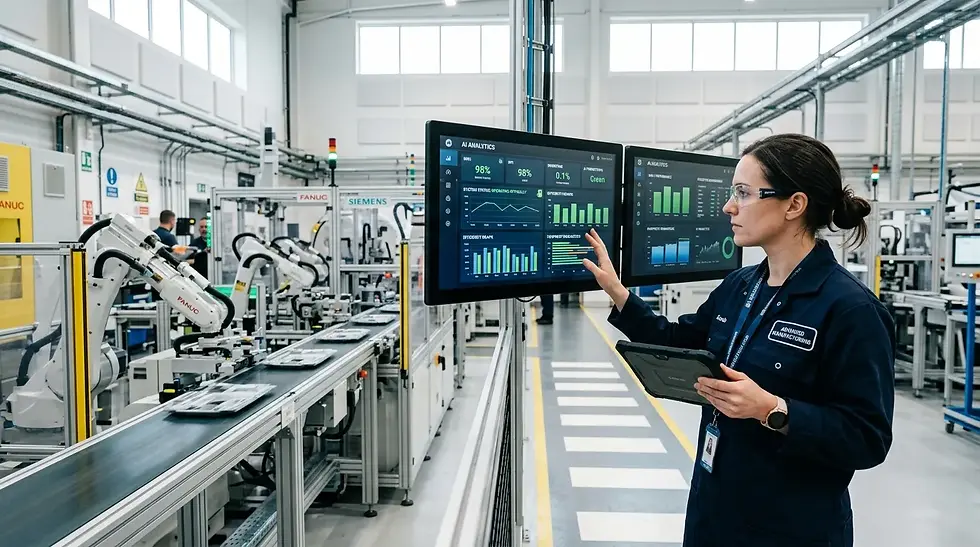
In 2026, meeting a target classification once is not enough—facilities need continuous operational excellence. Our Noor Technology capabilities (AI, RPA, IoT, smart connecting) can help implement the monitoring and automation foundations that make standards “live” in daily operations.
To discover Score Group’s full positioning as an integrator, visit our homepage: Score Group – Conseil et Intégration de Solutions Énergétiques et Digitales.
FAQ: ISO, TIA-942 and Tier standards in 2026
Is ANSI/TIA-942 the same thing as Uptime Institute Tier?
No. ANSI/TIA-942 and Uptime Institute Tiers both describe data center infrastructure resilience concepts (like redundancy, concurrent maintainability, and fault tolerance), but they are different frameworks with different criteria and certification ecosystems. TIA defines Rated-1 to Rated-4 and supports certification via its program, while Uptime defines Tier I to Tier IV and emphasizes both topology and operational sustainability. In practice, organizations often choose one as the primary “label” for stakeholders and use the other as a cross-check during design reviews. (tiaonline.org)
Does Tier III always mean 99.982% uptime in 2026?
Be cautious. While “Tier III = 99.982%” is widely repeated in the market, Uptime Institute states that since 2009 it removed references to “expected downtime per year” from the Tier Standard, because operational behaviors can dramatically change real availability even with an excellent design. Tier is best treated as an infrastructure performance standard (e.g., concurrently maintainable vs fault tolerant), not a guaranteed SLA number. If you need an SLA, define it separately and validate it with operations, monitoring, and maintenance plans. (journal.uptimeinstitute.com)
Which ISO standards matter most for data centers besides ISO/IEC 22237?
ISO/IEC 30134-2:2026 for standardized PUE measurement and reporting, (
ISO 50001 for energy management systems and continual improvement, and (
ISO/IEC 27001:2022 for information security governance and risk management. Together, they help you connect engineering choices (power/cooling/security) to management processes, audit trails, and performance metrics that stakeholders increasingly expect. ( iso.org )
What changed recently in TIA-942 that is relevant for 2026 projects?
Two recent signals matter. First, TIA announced the publication of ANSI/TIA-942-C in May 2024 as an update intended to improve data center performance, efficiencies, and resilience. Second, TIA issued a February 26, 2026 call for interest for an addendum to ANSI/TIA-942-C specifically to accommodate AI computing. For 2026 builds, this suggests you should design with enough flexibility (space, power distribution, cabling pathways, cooling options, monitoring) to absorb evolving requirements—especially for AI clusters and higher-density zones. (tiaonline.org)
How do we align data center standards with sustainability reporting expectations in Europe?
defining KPIs and measurement boundaries clearly (PUE is now standardized via ISO/IEC 30134-2:2026), (
maintaining reliable instrumentation and data collection, and (
preparing documentation that can be audited. The European Commission’s reporting framework under Delegated Regulation (EU) 2024/1364 supports a common approach to data center energy performance reporting, and the Commission indicates further work toward an energy efficiency package planned for April 2026 . Even outside the EU, this direction influences global expectations for transparency. ( energy.ec.europa.eu )
What’s next?
If you want to turn standards into an actionable roadmap (requirements → design decisions → implementation → operations), Score Group can help you structure and execute that journey across the full stack: infrastructure and data centers with Noor ITS, efficiency programs with Noor Energy, and operational automation with Noor Technology. To discuss a project, auditing preparation, or a modernization plan, reach out here: Contact Score Group.