Edge Data Center in 2026: Use Cases and Reference Architecture

Edge is no longer optional. In 2026, an edge data center is often the most practical way to deliver low-latency digital services, keep sensitive data closer to where it is produced, and maintain operations even when connectivity to the cloud is degraded.
This article explains Edge Data Center in 2026 use cases and reference architecture in a concrete, implementation-oriented way: what to run at the edge, how to design the stack (energy, IT, and innovation layers), and which architectural choices reduce risk in real deployments.
Score Group — “Where efficiency embraces innovation…” (“Là où l’efficacité embrasse l’innovation…”)
Why edge data centers matter in 2026
AI workloads are pushing compute closer to the source
As AI adoption accelerates, organizations are facing a new constraint: compute is not only a cloud topic—it is also a power, cooling, and locality topic. The International Energy Agency (IEA) estimates data centers consumed around 415 TWh of electricity globally in 2024 (about 1.5% of global electricity). (iea.org)
In the United States, a Pew Research Center overview (citing IEA estimates) notes that U.S. data centers consumed 183 TWh in 2024. (pewresearch.org)
Edge data centers help in two very practical ways:
Latency: bringing inference and control loops closer to users, machines, and sensors.
Data gravity and cost of movement: reducing the need to ship high-volume raw data (video, telemetry) to centralized regions before filtering and enrichment.
Resilience is becoming a business requirement, not just an IT feature
Distribution increases complexity—yet it also enables local autonomy. Industry outage research highlights how modern systems (more dependencies, more layers, more handoffs) can blur responsibility and create new failure patterns. (uptimeinstitute.com)
In edge architectures, resilience is not “add a UPS and hope.” It is a design goal: local survivability, controlled degradation, safe buffering, and consistent recovery procedures across dozens (or hundreds) of remote sites.
Edge is the meeting point of telco, OT/IoT, and cloud-native
Multi-access Edge Computing (MEC) is a major reference model when edge compute must integrate tightly with network access (5G/private LTE, Wi-Fi, fixed). ETSI maintains a formal MEC framework and reference architecture specification (ETSI GS MEC 003), including updated versions published in 2025. (etsi.org)
In parallel, cloud-native orchestration continues to extend to the edge. The CNCF project KubeEdge reached Graduated maturity in 2024, reflecting how Kubernetes-based patterns are becoming mainstream in edge deployments. (cncf.io)
What is an “edge data center” (and what it is not)
An edge data center is a small-to-medium footprint facility (or hardened room / modular enclosure) that provides data center-grade capabilities outside the main core data center or public cloud region, closer to workloads that are sensitive to latency, bandwidth, sovereignty, or uptime constraints.
Not just a server closet: edge sites require engineered power, cooling, monitoring, security, and repeatable operations.
Not a cloud region: edge favors locality and autonomy over massive scale; it is optimized for “right-sized” capacity and remote operability.
Not only for telecom: manufacturing, healthcare, logistics, energy, retail, and smart buildings increasingly depend on edge compute.
Edge data center use cases in 2026 (practical examples)
1) Smart manufacturing: quality inspection and predictive maintenance
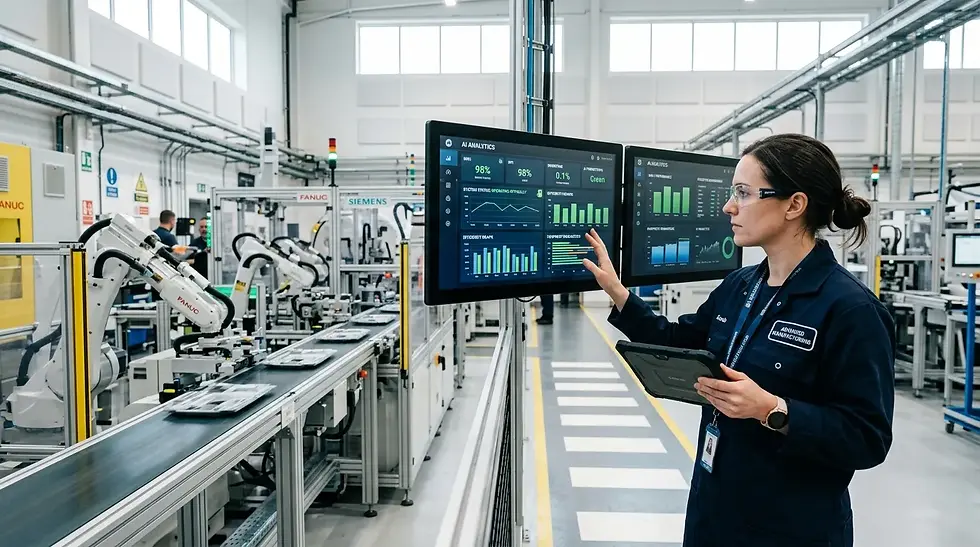
Factories generate high-frequency signals (PLC/SCADA, vibration, acoustic) and high-bandwidth streams (machine vision). Edge data centers are used to run near-real-time analytics and AI inference to:
Detect defects on production lines using computer vision.
Predict equipment failures from sensor patterns and maintenance history.
Keep production running during WAN or cloud outages by maintaining local decision loops.
Security and segmentation matter here: industrial environments often align cybersecurity controls with ISA/IEC 62443 concepts for OT systems. (isa.org)
2) Retail and quick-service: video analytics and on-site personalization
In retail, edge is widely adopted to process camera feeds locally for:
Queue length and staffing optimization.
Loss prevention analytics (with strict governance and privacy controls).
Digital signage and inventory intelligence.
The edge approach is particularly valuable when stores have limited WAN bandwidth or when data locality requirements prevent raw video from leaving the site.
3) Healthcare: clinical continuity and imaging workflows
Hospitals and clinics require high availability for clinical systems, while also controlling where patient data is processed. Typical edge use cases include:
Local caching and acceleration for imaging workflows (PACS-related transfers) and clinical applications.
On-prem/near-prem AI inference for triage support (governed, audited, and validated).
Operational technology monitoring (building systems, medical device telemetry) with strict access controls.
4) Telecom and private 5G: MEC applications and local breakout
MEC-style edge deployments support low-latency services such as AR-assisted field work, industrial robotics coordination, and localized content delivery. The ETSI MEC architecture is frequently used as a blueprint to structure application enablement, orchestration, and exposure of edge services through standardized interfaces. (etsi.org)
5) Energy and utilities: substations, microgrids, and DER coordination
Utilities increasingly deploy edge compute to handle:
Substation monitoring and event processing close to the grid edge.
Local optimization for distributed energy resources (DER): solar + storage + controllable loads.
Cyber-secure telemetry aggregation and anomaly detection before forwarding to central platforms.
This is where energy engineering and digital engineering must be designed together: power quality, autonomy time, and operational continuity are core requirements.
6) Smart buildings and campuses: real-time automation + data-driven efficiency
Buildings are becoming data centers’ “neighbors” at the edge: occupancy analytics, HVAC optimization, access control, and IoT-based maintenance all benefit from local processing. Edge compute also helps consolidate multiple building systems into a single, monitored and secured platform—without relying on always-on connectivity to distant cloud regions.
Use cases vs. requirements: a quick mapping
Use case | Primary driver | Data characteristics | Operational priority | Typical edge pattern |
|---|---|---|---|---|
Factory vision inspection | Low latency + bandwidth reduction | High-volume video, sensitive IP | Local autonomy, OT segmentation | Rugged micro-DC or hardened room |
Retail analytics | Bandwidth + privacy | Video + POS signals | Remote operability at scale | Standardized micro-DC per store/region |
Hospital clinical continuity | Availability + sovereignty | Highly regulated data | Controlled access, audit trails | On-prem edge + secure cloud extension |
Private 5G / MEC apps | Latency + local breakout | Mixed workloads, multi-tenant potential | Network integration, isolation | MEC-aligned edge zone |
Utility substation analytics | Resilience + security | Telemetry bursts, event-driven | Safe failure modes | Hardened edge node + strict OT security |
A reference architecture for edge data centers in 2026
A useful 2026 reference architecture must answer one question: how do we repeatably deploy secure, energy-efficient, remotely operated edge sites—without reinventing the stack every time?
At Score Group, we frame edge design with a tripartite architecture aligned to operational reality: Energy, Digital, and New Tech. This approach helps avoid a common failure mode: building a great IT platform on top of an under-engineered power/cooling foundation (or vice versa).
Layer 1 — Site, enclosure, and physical security
Form factor: rack-based micro data center, hardened IT room, or modular/containerized unit (depending on site constraints).
Physical controls: access control, surveillance, tamper detection, and asset inventory.
Environmental monitoring: temperature, humidity, water ingress, smoke, vibration (where relevant).
Layer 2 — Power chain and thermal design (the “Energy” pillar)
Power and cooling are not just facilities topics: they define how much compute you can safely deploy, and how predictable your uptime will be. Thermal envelopes are often designed using ASHRAE TC 9.9 guidance (Thermal Guidelines for Data Processing Environments), including reference materials updated in 2024 (based on the 5th edition, 2021). (ashrae.org)
Electrical path: utility feed (when available), switchgear, UPS, PDUs, rack-level metering.
Autonomy strategy: right-sized runtime + generator interface (where required) + graceful shutdown plans.
Cooling strategy: air (sealed aisle or localized), in-row, rear-door heat exchangers, or hybrid approaches depending on density and site constraints.
Energy observability: per-rack and per-circuit monitoring to support optimization and anomaly detection.
Layer 3 — Compute, storage, and network foundation (the “Digital” pillar)
Compute: CPU for general workloads; optional accelerators for AI inference where justified by latency/bandwidth constraints.
Storage: local NVMe for hot data, object/file layers for buffering, plus defined retention policies to prevent “edge data swamps.”
Network: segmentation (IT/OT/guest), secure routing, WAN edge (SD-WAN), and deterministic local switching for critical services.
In practice, most edge data centers need robust enterprise networking and systems engineering as a baseline. This aligns with our IT infrastructure services within Score Group’s Noor ITS division.
Layer 4 — Virtualization and orchestration (cloud-native at the edge)
In 2026, edge platforms increasingly standardize around:
Containers and Kubernetes for application packaging and lifecycle control.
Edge-aware orchestration for intermittent connectivity, device management, and remote upgrades (examples include CNCF ecosystem patterns; KubeEdge is a prominent Kubernetes-native edge framework). (cncf.io)
Policy-based placement: “run locally unless policy says otherwise,” based on latency, data classification, and cost-to-move.
Layer 5 — Security architecture (Zero Trust + OT security principles)
Edge multiplies attack surface: more locations, more devices, more operators, more vendors. A modern reference architecture typically combines:
Zero Trust principles (identity-first, least privilege, continuous verification). NIST SP 800-207 (published August 2020) is a core reference for Zero Trust Architecture. (csrc.nist.gov)
OT security alignment where industrial systems are involved, commonly mapped to ISA/IEC 62443 families and practices. (isa.org)
Secure remote access with strong authentication, device posture checks, and auditability.
Supply-chain hygiene: signed images, controlled registries, and patch governance across fleets.
Within Score Group, our Noor ITS division covers security foundations such as cybersecurity audits and hardening that are critical when edge expands the footprint.
Layer 6 — Observability, operations, and lifecycle management
Edge sites succeed or fail in operations. A reference architecture should define:
Telemetry: health metrics (IT + facilities), logs, events, and tracing for applications.
Remote management: out-of-band access, secure console paths, standardized runbooks.
Automation: golden configurations, immutable builds where possible, and automated remediation for known failure classes.
Lifecycle: onboarding, upgrades, vulnerability response, and end-of-life plans across the fleet.
Architecture blocks mapped to Score Group’s divisions
Architecture block | Typical scope | How Score Group can align expertise |
|---|---|---|
Power, UPS, energy monitoring | Electrical design, metering, optimization | Noor Energy (energy intelligence and performance engineering) |
Edge data center design & optimization | Layout, resilience, operating model | Noor ITS via our data center expertise |
Connectivity and infrastructure | LAN/WAN, systems, maintenance readiness | Noor ITS through infrastructure engineering |
Secure hosting extension | Hybrid models, compliance-driven hosting | Noor ITS with Cloud & Hosting |
IoT and real-time data capture | Sensors, gateways, edge connectivity patterns | Noor Technology with Smart Connecting |
Hardware sourcing & rugged components | Reliable equipment for demanding environments | Noor Industry (durable materials and solutions) |
Key design choices and trade-offs (what changes in 2026)
Choosing the right edge footprint: one size does not fit all
In 2026, “edge” can mean:
On-prem edge inside a facility (hospital, factory, campus): best for sovereignty and local control.
Near-prem edge (regional hub): consolidates multiple sites and reduces per-site complexity.
Network edge (telco/MEC zone): best when integration with access network and local breakout is the driver.
Architecture tip: define latency needs, data classification, and required autonomy time first—then pick the footprint. If the WAN can fail and the site must keep operating, the edge must be designed as a “mini critical facility,” not as a best-effort IT closet.
Security: edge expands the blast radius unless identity becomes the perimeter
Zero Trust is especially relevant at the edge because you cannot assume a trusted internal network across remote locations. NIST SP 800-207 provides a structured way to think about policy enforcement points, trust evaluation, and migration. (csrc.nist.gov)
Energy efficiency: measure first, optimize continuously
With data centers already a material part of electricity demand, energy efficiency is becoming a board-level constraint. The IEA projects significant growth in data center electricity demand in coming years, with scenarios that reach around 945 TWh by 2030 in a base case described in its 2025 analysis. (iea.org)
Edge does not automatically reduce total energy consumption; it redistributes it. The reliable method is to establish a baseline and track:
IT load (kW) vs. facility load (kW), per site.
Cooling overhead drivers: ambient conditions, airflow management, filtration, maintenance drift.
Workload efficiency: right-sizing, scheduling, and model optimization for AI inference at the edge.
Implementation roadmap: from use case to repeatable deployment
Workload qualification: classify applications by latency sensitivity, data volume, and “must-run-local” constraints (privacy, continuity, OT safety).
Site readiness assessment: power quality, space, cooling feasibility, physical security, and telecom options.
Reference design selection: pick a standard edge “pod” (rack/enclosure + power chain + monitoring) that can be replicated.
Platform build: standard OS baseline, container runtime, orchestration, logging/metrics, remote management, backup/retention.
Security hardening: identity integration, segmentation, secure remote access, patch and image governance, OT alignment where needed.
Pilot then scale: prove operations (runbooks, monitoring, spares strategy), then industrialize rollout.
How Score Group approaches edge: Energy + Digital + New Tech
Score Group acts as a global integrator, bringing together energy engineering, digital infrastructure, and innovation—so edge sites are not only deployed, but operated reliably over time.
Energy pillar: our Noor Energy division supports intelligent energy management, building systems integration, and efficiency-oriented design for edge sites (where every kW and every degree matters).
Digital pillar: our Noor ITS division covers the IT foundation—networking, systems, cybersecurity, and data center design—so edge becomes a governed extension of your enterprise architecture.
New Tech pillar: our Noor Technology division helps embed innovation such as IoT connectivity and real-time data flows through Smart Connecting, enabling edge use cases to generate measurable operational value.
FAQ: Edge Data Centers in 2026
What is the difference between an edge data center and a micro data center?
A micro data center is usually a form factor (often an enclosed rack or small modular unit). An edge data center is a deployment model: compute placed close to where data is produced or decisions are made. In practice, many edge deployments use micro data centers as building blocks, but an edge data center may also be a hardened room, a modular container, or a MEC zone—depending on latency, security, and operational needs.
How do I decide which workloads should run at the edge in 2026?
latency, (
bandwidth cost/availability, (
data locality or regulatory requirements, and (
continuity needs when the WAN fails. Video analytics, industrial control support, local buffering, and on-site AI inference are common candidates. A practical technique is to map each workload to a “local autonomy requirement” (what must keep running for 15–60 minutes without cloud access), then design the edge footprint to meet that requirement safely
Is Kubernetes really ready for edge operations at scale?
Kubernetes is widely used, but edge operations require additional considerations: intermittent connectivity, secure remote upgrades, and device/fleet management. The ecosystem has matured significantly—projects like CNCF’s KubeEdge (Graduated in 2024) reflect the shift toward Kubernetes-native edge patterns. (cncf.io) Still, success depends less on the orchestrator itself and more on standardization: golden images, consistent observability, strict security baselines, and disciplined lifecycle management across all sites.
What security baseline should an edge data center adopt by default?
A strong default is a Zero Trust mindset: authenticate explicitly, authorize minimally, and continuously verify. NIST SP 800-207 is a key reference for structuring Zero Trust Architecture. (csrc.nist.gov) For industrial or utility environments, align controls and segmentation with ISA/IEC 62443 concepts to reflect OT realities and safety constraints. (isa.org) Combine this with secure remote access, patch governance, signed software artifacts, and centralized audit logging—because edge increases the number of places where security can drift.
How should I think about cooling and environmental limits for edge sites?
Edge sites often operate in harsher, less predictable environments than core data centers. Use formal environmental guidance rather than assumptions. ASHRAE TC 9.9 thermal guidance is commonly used to define acceptable operating envelopes and to design monitoring and alarms accordingly (including updated reference materials in 2024). (ashrae.org) The best practice is to engineer for stability (airflow, filtration, maintenance access) and to instrument the site so operational drift is detected early—before it becomes downtime.
What’s next?
If you are planning an edge rollout (single site or multi-site), the fastest path to a reliable outcome is to start from a repeatable reference architecture and an operating model that combines energy engineering, IT foundations, and secure-by-design principles. Explore our Data Center capabilities and our broader Noor ITS services, or reach out via the Score Group website to discuss an edge blueprint aligned with your constraints and use cases.
Selected external references (for further reading)
IEA — Energy and AI (2025): data center electricity demand and outlook. (iea.org)
Pew Research Center (2025): U.S. data center electricity consumption overview (citing IEA). (pewresearch.org)
ETSI GS MEC 003 (v4.1.1, 2025): MEC framework and reference architecture. (etsi.org)
NIST SP 800-207 (2020): Zero Trust Architecture. (csrc.nist.gov)
ISA: ISA/IEC 62443 industrial cybersecurity standards. (isa.org)
ASHRAE TC 9.9: Thermal Guidelines reference card (2021/2024). (ashrae.org)