Ethical, efficient, AI-ready infrastructure in 2025

L’infrastructure du futur éthique efficiente et prête pour l’intelligence artificielle. In 2025, that means building foundations that are secure, low‑carbon, resilient, and capable of powering real AI outcomes—without compromising ethics or budgets.
At Score Group, we bridge energy systems, digital infrastructure and new technologies to help organizations design, deploy and operate this next-generation stack. Through our Noor Energy, Noor ITS and Noor Technology divisions, we turn strategy into results—aligning operational efficiency, sustainability and AI readiness.
“Where efficiency meets innovation” — Score Group’s ethos, from design to operations.
At a glance
Build on three pillars: Energy intelligence, robust Digital infrastructure and responsible New Tech.
Design for trust: privacy by design, compliance with evolving AI regulations and transparent governance.
Engineer for efficiency: measure PUE/WUE, optimize workloads, and decarbonize power with on‑site renewables.
Make AI real: data pipelines, MLOps, GPU‑ready facilities and observability for models and services.
Start fast: 90‑day baseline, quick wins, and a 12‑month roadmap tied to measurable KPIs.
What “ethical, efficient, AI-ready” really means in 2025
Ethics by design and by default
An ethical infrastructure protects individuals, respects society, and complies with the law. That includes privacy‑by‑design, explainability for automated decisions, and robust governance for data and models. In Europe, the AI Act sets risk‑based obligations for AI systems, complementing GDPR requirements on personal data. Organizations should formalize model risk assessments, human‑in‑the‑loop controls, and clear accountability spanning IT, security, legal and business.
Read more: the European approach to AI regulation and trustworthiness (European Commission); GDPR text and principles (EUR‑Lex); NIST AI Risk Management Framework 1.0 (NIST).
Efficiency beyond power bills
Efficiency isn’t just PUE. It spans electricity and water use, heat recovery, circular IT procurement, server utilization, and code efficiency. ISO 50001 guides energy management systems; ISO/IEC 30134 defines standardized KPIs for data centers (PUE, WUE, etc.). Practically, this means telemetry at every layer, rightsizing, workload scheduling, and a lifecycle view that tackles embodied carbon—not only kWh.
AI readiness from rack to runtime
AI‑ready infrastructure supports data flows, training/inference, and safe operations. It combines:
Resilient compute (CPU/GPU), fast storage, high‑bandwidth networking, and optimized cooling/power.
MLOps for scalable pipelines, automated deployment, monitoring and rollback.
Data governance (catalogs, lineage, quality), model registries, and policy enforcement.
Global electricity use by data centers and networks continues to rise with AI adoption, underscoring the need for efficiency and clean energy sourcing (IEA analysis).
A tripartite blueprint aligned to Score Group’s architecture
Energy pillar — Noor Energy: intelligence for performance
Our Noor Energy division brings smart energy and building management together to cut consumption and emissions while improving reliability.
Smart energy management: real‑time monitoring, demand response, power factor correction, and automated setpoints.
Building systems (GTB/GTC): integrated controls for HVAC, lighting and occupancy to avoid drift and waste.
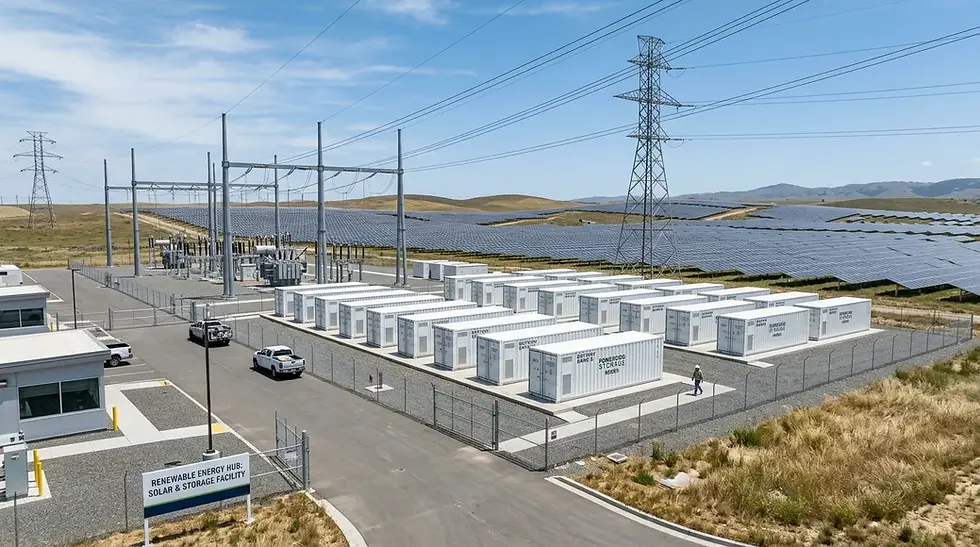
Renewables and storage: rooftop PV, on‑site batteries and smart inverters to shave peaks and power AI workloads with cleaner electrons.
Sustainable mobility: EV charging strategies that balance fleet needs, grid constraints and on‑site generation.
Standards like ISO 50001 help institutionalize continuous improvement, from baselining to corrective actions. Science‑based pathways can align your targets with climate science (SBTi).
Digital pillar — Noor ITS: the infrastructure backbone
Noor ITS covers networks, systems, data centers, cloud and cybersecurity—the bedrock for availability, performance and protection.
Networks and security: segmented architectures, Zero Trust, SD‑WAN/SASE, and robust identity.
Hybrid data centers: right workload on the right platform (on‑prem, private, public), with capacity and cooling planning for GPU clusters.
Resilience and continuity (PRA/PCA): tested backup, failover runbooks, and recovery objectives aligned to business criticality.
Observability: unified monitoring (infra, apps, energy) with SLOs tied to outcomes.
Downtime remains costly; industry analyses highlight persistent outage risks, making resilience design and drills non‑negotiable (Uptime Institute 2024 outage analysis).
New Tech pillar — Noor Technology: innovation with guardrails
Noor Technology helps you operationalize AI, automation and IoT—safely and at scale.
AI and MLOps: from pilot to production with automated testing, model registries, drift detection and shadow deployments.
RPA and intelligent automation: optimize processes, free human time, and raise quality.
Smart connecting (IoT): sensorization for energy, occupancy and process insights feeding both efficiency and AI use cases.
Application development: web, mobile and line‑of‑business apps integrated with your data and identity platforms.
Adopt a governance framework aligned with the NIST AI RMF and OECD AI principles to build trust into your AI lifecycle from day one (NIST AI RMF).
From principles to operations: key roles and responsibilities
Building the future‑ready stack is a team sport. Typical guardrails include:
A cross‑functional steering committee spanning IT, facilities, security, data, legal and sustainability.
Policies for data minimization, retention, residency and model usage.
Change management and training so teams can operate new platforms confidently.
A practical 12‑month roadmap
Phase | Focus | Key deliverables | Owner (lead) | Example KPIs |
Q1 | Baseline & governance | Energy and workload baselines; risk and compliance register; AI governance charter | Noor Energy + Noor ITS + Noor Technology | PUE/WUE baseline, asset inventory coverage, data catalog coverage |
Q2 | Quick wins & foundations | BMS retuning; patching and segmentation; GPU power/cooling readiness; data ingestion pipelines | Noor Energy + Noor ITS | kWh avoided, % patched critical systems, network segmentation score |
Q3 | AI pilots & resilience | Two AI/RPA pilots in production with MLOps; DR test and remediation; renewables sizing study | Noor Technology + Noor ITS + Noor Energy | Model drift alerts, RTO/RPO achieved, % self‑consumed renewable kWh |
Q4 | Scale & optimize | Workload right‑sizing; heat recovery feasibility; procurement aligned with circularity; SLOs and FinOps/GreenOps | Noor ITS + Noor Energy + Noor Technology | Server utilization, WUE improvement, embodied CO2e in purchases |
Title: A 12‑month, KPI‑driven roadmap to ethical, efficient, AI‑ready operations
Designing for sustainability and performance metrics
Metrics that matter
Measure what you intend to improve:
Energy: PUE (power), WUE (water), CUE (carbon), grid carbon intensity (gCO2e/kWh).
IT: server utilization, GPU occupancy, storage efficiency, code efficiency (profiling).
Reliability: SLO compliance, mean time to recover, change failure rate.
Governance: lineage coverage, access policy violations, audit trail completeness.
Standards and references help you compare apples to apples—see ISO/IEC 30134 for KPI definitions and ASHRAE TC 9.9 for thermal guidelines that can safely widen operating ranges (ISO PUE; ASHRAE TC 9.9).
Procurement and circularity
Sustainable IT starts at sourcing:
Prefer equipment with ENERGY STAR and EPEAT ratings (ENERGY STAR servers; EPEAT registry).
Evaluate total cost of ownership and total carbon (TCO + TCO2e), including embodied emissions.
Enable repairability, parts harvesting and responsible recycling via certified partners (e.g., R2/e‑Stewards).
Align reporting with the Greenhouse Gas Protocol scopes and categories (GHG Protocol).
Security, governance and trust
Data protection and sovereignty
Apply privacy‑by‑design across the stack:
Minimize personal data, anonymize or pseudonymize where possible, and encrypt at rest/in transit.
Enforce data residency and access policies; log and review access to sensitive datasets.
Keep records of processing activities and conduct DPIAs for high‑risk processing.
GDPR remains the reference for personal data protection in the EU—plan for audits and evidence trails (EUR‑Lex GDPR).
AI governance you can operate
Operational guardrails make AI safer and more reliable:
Maintain model cards and data sheets, record training data provenance and consent.
Monitor inputs/outputs for drift, bias and anomalies; keep human review where impact is high.
Define rollback procedures and kill‑switches; retain logs for investigations and compliance.
Use the NIST AI RMF functions—Map, Measure, Manage, Govern—to structure practices and controls (NIST AI RMF).
Practical steps to start in 90 days
Establish a cross‑functional steering group and name accountable owners.
Inventory critical assets (IT, OT, data) and map business services to dependencies.
Baseline energy (PUE/WUE), utilization and reliability; identify top 10 hotspots.
Stand up a data catalog and define golden sources for AI/analytics.
Pilot two quick wins: BMS retuning and workload right‑sizing with automated schedules.
Draft the AI governance charter (use cases, risk tiers, approvals) and publish it.
Define the 12‑month roadmap with quarterly KPIs and a reporting cadence to leadership.
How Score Group helps
At Score Group, we act as an integrator across the full stack:
Noor Energy delivers energy intelligence: metering, GTB/GTC, renewables and storage for cleaner, cheaper power.
Noor ITS builds and operates resilient digital infrastructure: networks, data centers, cloud, cybersecurity, workplace and continuity.
Noor Technology turns innovation into outcomes: AI, RPA, IoT and application development with governance built‑in.
Discover our approach and get in touch at Score Group.
FAQ
What is an “AI‑ready” infrastructure in practical terms?
AI‑ready means your foundation supports the full lifecycle: reliable compute (including GPUs), fast storage, low‑latency networking, and observability from data ingestion to model outputs. It includes MLOps tools for versioning, testing and deployment; data governance (catalogs, lineage, access control); and facilities capable of powering and cooling dense workloads. Finally, it means guardrails—security, compliance and monitoring—so you can scale AI use cases safely and efficiently.
How can we reconcile GPU power needs with sustainability goals?
Start with efficiency: profile models, use quantization and batching to reduce compute. Consolidate and schedule workloads to raise GPU utilization. On the facilities side, optimize cooling (hot/cold aisle, liquid or rear‑door heat exchangers where justified) and reclaim heat where possible. Source low‑carbon electricity—PPAs, on‑site PV and batteries—to cut emissions. Measure PUE, WUE and carbon intensity so improvements are visible and auditable, and align with ISO 50001 for continuous optimization.
Do we need our own data center, or is hybrid cloud the safer bet?
Most organizations benefit from hybrid: keep latency‑sensitive, regulated or steady workloads on‑prem/private cloud, and use public cloud for elastic or experimental needs. The decision hinges on TCO, data residency, performance, and your team’s operating model. Design a reference architecture that standardizes identity, networking, observability and security controls across environments. Test disaster recovery and cost/energy guardrails to avoid surprises when scaling.
Which standards help ensure ethical and compliant AI operations?
Combine legal frameworks with practical guides. In Europe, GDPR governs personal data and the AI Act introduces risk‑based obligations for AI systems. Operationally, the NIST AI Risk Management Framework provides a widely adopted structure for mapping risks, measuring controls, and governing models. For sustainability and facilities, ISO 50001 (energy management) and ISO/IEC 30134 (data center KPIs like PUE/WUE) support credible reporting and continuous improvement.
Key takeaways
Ethical, efficient, AI‑ready infrastructure blends energy intelligence, secure digital platforms and responsible innovation.
Trust and compliance are designed in: privacy, governance, transparency and auditability.
Measure relentlessly—PUE/WUE, utilization, SLOs and carbon—to drive decisions and prove progress.
Start small, move fast: a 90‑day baseline and a 12‑month roadmap deliver momentum and outcomes.
Align procurement and operations with circularity to reduce cost and embodied carbon.
Ready to accelerate? Explore how we can help at Score Group.