How to build a high-performing, innovative company in 2025
- Nov 17, 2025
- 8 min read

Comment faire de son entreprise une organisation performante et innovante — here’s your 2025 playbook.
If you’re asking how to build a high-performing, innovative company in 2025, the answer is a disciplined system: align strategy to measurable outcomes, build a resilient digital backbone, turn energy into a competitive asset, and scale new technologies with governance. At Score Group, we integrate energy, digital and new tech so your execution is as bold as your vision—turning efficiency into innovation and innovation into performance.
At a glance
Set a clear North Star and measurable OKRs that link strategy to operations and cash flow.
Build a secure, scalable digital foundation (cloud, networks, cybersecurity, data) before scaling use cases.
Treat energy performance as a P&L lever: measure, optimize, electrify, and produce on-site renewables.
Industrialize innovation: prioritize high-ROI use cases in AI, RPA, IoT, and modern apps—with governance.
Operate a portfolio: fund, staff, and track initiatives through value delivery, not just project delivery.
Start with outcomes: vision, metrics, governance
Define strategic outcomes and metrics that matter
Align leadership on 3–5 outcomes for 12–24 months (e.g., reduce energy intensity by 15%, cut incident MTTR by 40%, launch 3 data-driven services).
Tie each outcome to OKRs and owners at C-level and domain leads.
Use dual loops: lagging KPIs (profitability, uptime, safety) and leading indicators (deployment frequency, adoption, energy savings backlog).
Benchmark against recognized frameworks when relevant (e.g., ISO 50001 for energy management, ISO 27001 for security).
External resources:
ISO 50001 energy management systems: https://www.iso.org/iso-50001-energy-management.html
ISO/IEC 27001 information security: https://www.iso.org/isoiec-27001-information-security.html
Governance and funding that favors value, not volume
Create a cross-functional Portfolio Value Office (PVO) to prioritize initiatives across Energy, Digital, and New Tech.
Fund by stages (discovery, pilot, scale). Kill fast if value isn’t proven; double down when it is.
Standardize business cases (problem, expected value, data availability, technical readiness, risks, change plan).
Culture that enables velocity and safety
Incentivize teams on delivered outcomes, not hours or tickets closed.
Establish psychological safety for experimentation—bounded by clear risk and compliance policies.
Invest in leadership routines that reinforce clarity, focus, and learning.
What gets measured gets improved; what gets improved gets scaled.
Energy excellence as a performance lever (Noor Energy)
At Score Group, our Noor Energy division puts intelligence at the service of energy performance—so sustainability boosts profitability.
Intelligent energy management
Instrument consumption (sites, lines, assets) to build a real-time baseline.
Optimize through analytics, scheduling, and demand response; align with ISO 50001 for continuous improvement.
Prioritize quick wins (HVAC tuning, compressed air, lighting) and reinvest savings into larger retrofits.
Useful references:
IEA Energy Efficiency 2024 outlook: https://www.iea.org/reports/energy-efficiency-2024
Smart buildings and OT integration (GTB/GTC)
Deploy GTB/GTC systems to orchestrate HVAC, lighting, occupancy, and maintenance.
Connect operational technology (OT) safely to your data platform for predictive maintenance and space optimization.
Implement role-based access and micro-segmentation to protect building and industrial controls.
Sustainable mobility
Right-size EV charging infrastructure to fleet and usage patterns; balance AC/DC chargers, scheduling, and load management.
Integrate charging with building energy systems to flatten peaks and cut OPEX.
Track TCO and emissions per km to guide procurement and routing policies.
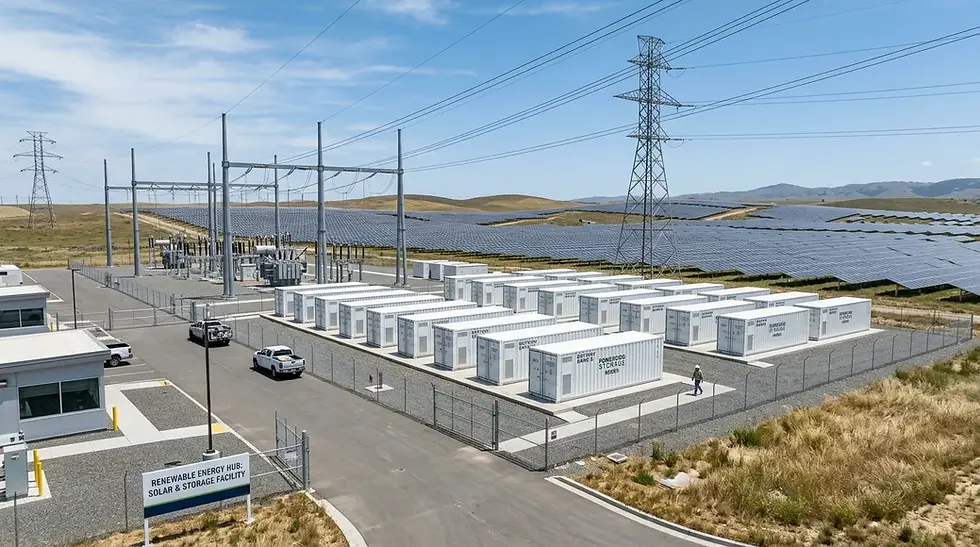
On-site renewables and storage
Assess rooftops, parking canopies, and brownfields for PV; consider storage to increase self-consumption.
Orchestrate generation, consumption, and tariffs as one system.
Use digital twins to test scenarios (tariff changes, growth, seasonality) before investing.
Reference:
IRENA Renewable Capacity Statistics 2024: https://www.irena.org/Publications/2024/Mar/Renewable-Capacity-Statistics-2024
Build the digital backbone (Noor ITS)
Our Noor ITS division helps you modernize and secure your infrastructure so innovation can run reliably at scale.
Modern infrastructure, cloud, and networks
Standardize networks (LAN, WAN, SD-WAN), identity (SSO, MFA), and endpoint baselines.
Choose the right cloud mix (private/public/hybrid) based on data sensitivity, latency, and integration.
Automate provisioning and configuration to reduce lead time for change.
Practical guidance:
U.S. DOE Better Buildings — Data Center Energy Efficiency: https://betterbuildingssolutioncenter.energy.gov/technology-solution/data-center-energy-efficiency
Cybersecurity by design
Adopt the NIST Cybersecurity Framework 2.0; map assets, assess risks, implement controls, and rehearse incident response.
Put Zero Trust principles in practice: verify explicitly, least privilege, assume breach.
Continuously monitor and patch; implement immutable backups and tabletop exercises for ransomware scenarios.
References:
NIST CSF 2.0: https://www.nist.gov/cyberframework
ENISA Threat Landscape 2023: https://www.enisa.europa.eu/publications/enisa-threat-landscape-2023
Data centers and edge
Optimize PUE with airflow management, higher allowable inlet temperatures within safe ranges, and efficient UPS systems.
Use telemetry to predict failures and plan capacity; consider edge nodes for low-latency use cases.
Build a shared data layer (catalog, quality, lineage) to serve analytics and AI at scale.
Resilience and continuity (PRA/PCA)
Define Recovery Time Objective (RTO) and Recovery Point Objective (RPO) by business service.
Test failover regularly; automate runbooks where possible.
Align with ISO 22301 for business continuity best practices.
Resource:
ISO 22301 Business Continuity: https://www.iso.org/iso-22301-business-continuity.html
Integrate new technologies with governance (Noor Technology)
Our Noor Technology division deploys AI, RPA, IoT, and modern apps to solve real problems—safely and repeatably.
AI and analytics that drive outcomes
Start with high-value, data-rich use cases: demand forecasting, quality inspection, churn prediction, anomaly detection.
For GenAI, define policies (data boundaries, human-in-the-loop, red-teaming) and measure productivity or revenue impact.
Build MLOps/LLMOps pipelines for versioning, monitoring, and bias/drift checks.
Evidence and frameworks:
McKinsey (2023) on GenAI’s productivity potential: https://www.mckinsey.com/capabilities/strategy-and-corporate-finance/our-insights/the-economic-potential-of-generative-ai-the-next-productivity-frontier
NIST AI Risk Management Framework: https://www.nist.gov/itl/ai-risk-management-framework
OECD AI Principles: https://oecd.ai/en/ai-principles
RPA and process intelligence
Map processes with task/process mining; automate high-volume, rule-based steps first.
Combine RPA with AI for classification, extraction, and decision support.
Track end-to-end cycle time and error rate to capture true value, not just bot counts.
Smart connecting (IoT) and real-time visibility
Instrument critical assets with sensors; stream to a secure, scalable data platform.
Use event processing for alerts and digital twins for scenario testing.
Standardize device onboarding, certificates, and firmware updates to reduce risk.
Modern app development
Adopt API-first and event-driven patterns; wrap legacy with adapters to speed delivery.
Implement DevSecOps and feature flags to ship small, reversible changes.
Measure using DORA metrics (deployment frequency, lead time, MTTR, change failure rate).
Reference:
DORA/State of DevOps (Google Cloud): https://cloud.google.com/devops/state-of-devops
From pilots to scale: your operating system for innovation
A portfolio approach to scaling
Group initiatives into themes (Operational Efficiency, New Revenue, Risk & Compliance).
Balance horizon-1 optimizations with horizon-2/3 bets; cap portfolio WIP to avoid dilution.
Publish a public backlog and a quarterly value review to keep momentum and transparency.
Data and change management
Invest early in data quality, master data, and governance; poor data multiplies costs later.
Upskill teams and managers in analytics, AI literacy, and secure-by-design practices.
Combine training with adoption nudges inside tools (in-app guidance, templates).
Evidence:
Microsoft Work Trend Index 2024 on AI skills and adoption: https://www.microsoft.com/en-us/worklab/work-trend-index/2024-annual-report
World Economic Forum, Future of Jobs 2023: https://www.weforum.org/reports/the-future-of-jobs-report-2023/
High-impact use cases to consider in 2025
Operations and energy
Predictive maintenance to reduce unplanned downtime and spare parts inventory.
Energy demand forecasting and automated load shifting.
Space utilization analytics to reduce facility costs.
Customer and revenue
Intelligent quoting and pricing with constraints (inventory, lead times, energy costs).
Customer service copilots for faster resolution and consistent quality.
Personalized after-sales and condition-based service contracts.
Risk and resilience
Continuous attack surface management and automated incident response playbooks.
Supply chain risk scoring by tier and geo-exposure.
Regulatory reporting automation (ESG, energy, privacy).
Efficiency is the fuel; innovation is the engine. You need both to win.
12-month roadmap to a high-performing, innovative company
Quarter | Focus | Key actions | Owners | Success metrics |
Q1 | Outcomes & baselines | Define 3–5 outcomes and OKRs; energy and IT baselines; top-10 risks; fund discovery | CEO, CFO, COO, CIO/CTO, CSO | OKRs set; baselines captured; governance live |
Q2 | Foundations | Network/identity hardening; data platform MVP; ISO 50001 gap analysis; 3 discovery sprints | CIO, CISO, Head of Energy, Data Lead | Reduced lead time for change; initial energy savings (quick wins) |
Q3 | First scale-ups | GTB/GTC rollout; 2 AI/RPA use cases in production; EV charging pilot; continuity tests | COO, Head of Facilities, Noor Energy/ITS/Tech leads | Deployment frequency up; MTTR down; energy intensity -5–8% |
Q4 | Industrialization | Portfolio expansion (5–8 use cases); storage/solar business case; MLOps/LLMOps in place | PVO, Finance, Divisional leads | Value realized vs. plan; adoption >70%; audit-ready controls |
How Score Group helps
At Score Group, we act as an end-to-end integrator—where efficiency meets innovation. Our Noor Energy division manages intelligent, sustainable, and profitable energy performance. Our Noor ITS division is the digital backbone partner for infrastructure, cybersecurity, cloud/hosting, Digital Workplace, and business continuity. Our Noor Technology division operationalizes AI, RPA, IoT, and modern applications. Together, we align strategy, architecture, and delivery to your outcomes. Learn more about our approach on the Score Group website.
Measurement that drives continuous improvement
Energy: energy intensity (kWh per unit of output), peak demand, self-consumption rate, verified savings.
Reliability: uptime by critical service, MTTR, change failure rate.
Software delivery (DORA): deployment frequency, lead time for change, MTTR, change failure rate.
Cybersecurity: mean time to detect/respond, phishing resilience rate, backup recovery success.
Adoption and value: active users, time saved/revenue uplift verified by finance, NPS/CSAT.
Tie these to a quarterly value review and adjust funding accordingly.
FAQ
What is the very first step to become more innovative and high-performing?
Start by agreeing on 3–5 clear outcomes for the next 12–24 months and define how you will measure them. Baseline your current performance (energy usage, uptime, incident rates, delivery lead times, customer satisfaction). With this, you can prioritize the few initiatives that will move the needle, assign accountable owners, and stop activities that don’t align. At Score Group, we often run a brief discovery to quantify the opportunity, de-risk the plan, and set governance so execution stays tied to value.
How do we balance speed of innovation with security and compliance?
Design for both from the outset. Standardize identity (SSO/MFA), network segmentation, data classification, and secure pipelines to reduce friction. Use the NIST Cybersecurity Framework 2.0 to assess and close gaps, and establish guardrails for AI and data use. Automate controls and evidence collection (infrastructure as code, policy as code). This lets teams ship small, reversible changes quickly while staying audit-ready—safety enables speed rather than blocking it.
Which energy actions deliver fast ROI without major capex?
Focus on visibility and control first: metering, monitoring, and analytics to find anomalies; tune HVAC schedules and setpoints; fix compressed air leaks; optimize lighting and occupancy. Implement GTB/GTC to coordinate equipment and avoid simultaneous heating/cooling. These interventions typically require limited capex and can fund larger projects (e.g., solar and storage). Align to ISO 50001 to sustain gains through continuous improvement.
How should we pick our first AI or RPA use cases?
Choose processes with high volume, clear rules, and measurable impact—where data quality is acceptable. Examples: invoice processing, order-to-cash exceptions, predictive maintenance in equipment with good telemetry, or customer support triage. Build a thin slice to production in weeks, not months, to validate value, then scale with MLOps/RPA governance. Avoid “science projects” without owners or metrics; every use case must tie to a business outcome.
How do we prove value and avoid “pilot purgatory”?
Fund initiatives in stages with explicit exit criteria: validate problem and data (discovery), prove value and feasibility (pilot), and then scale with adoption and controls. Require finance-verified impact (savings, revenue, risk reduction) and user adoption thresholds before advancing. Maintain a transparent portfolio view and stop or pivot underperforming efforts. This portfolio discipline turns experimentation into a repeatable, value-generating system.
Key takeaways
Anchor everything in 3–5 outcomes, measurable OKRs, and a quarterly value cadence.
Build a secure, scalable digital backbone before scaling innovation.
Turn energy performance into a profit and resilience lever.
Scale AI/RPA/IoT with governance, data quality, and product thinking.
Measure what matters (DORA, MTTR, energy intensity, adoption) and fund by results.
Start small, prove value fast, and industrialize what works.
Ready to align efficiency with innovation? Discover how we can help at Score Group.